Latin vs. ballroom: which dance style is right for you?
Six differences, one clear pick.
Quick answer
Where should I start? Latin dances (cha cha, samba, rumba, paso doble, jive) put the spotlight on hip movement, rhythm and passion. Ballroom dances (waltz, foxtrot, tango, Viennese waltz, quickstep) focus on elegance, posture, and smooth movement. Most beginners are drawn to one style. Trust that pull.
One of the first questions I hear from new students at our Montreal studio is: "Should I learn Latin or Ballroom?" After 19 years of teaching, my honest answer is almost always "both." But I understand wanting to start somewhere, so pick by the feeling you want.
The international Latin dances
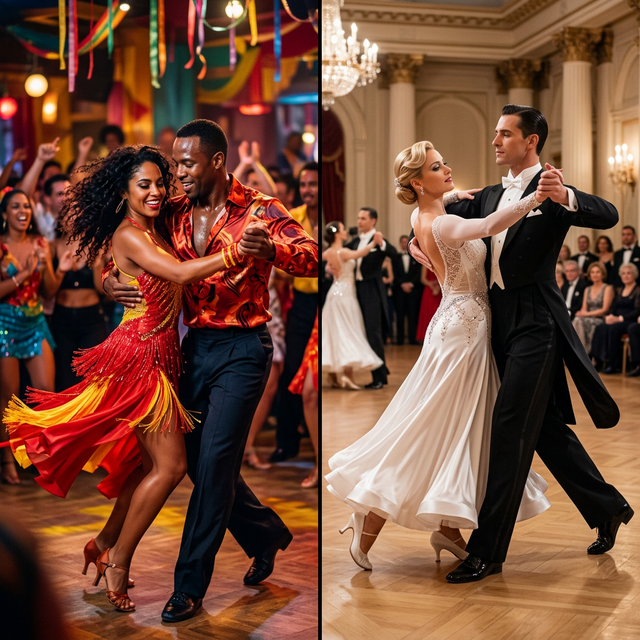
Latin dances are the fiery, rhythmic side of the ballroom world. They focus on hip movement (called "Cuban motion"), individual expression, and energetic musicality:
- Cha cha: Playful and cheeky, with sharp hip action and syncopated timing. Great for pop and Latin music lovers.
- Samba: Energetic and bouncy, inspired by Brazilian carnival. The most physically demanding Latin dance after jive.
- Rumba: Slow, sensual, and deeply expressive. Often called "the dance of love." Perfect for those who enjoy storytelling through movement.
- Paso doble: Dramatic and powerful, inspired by the Spanish bullfight. The most theatrical dance in the repertoire.
- Jive: Fast, fun, and athletic. Think rock'n'roll energy with structured technique.
The international ballroom dances
Ballroom dances (also called "Standard") are the elegant, sweeping dances that travel around the floor. They require a strong connected frame between partners and smooth, flowing movement:
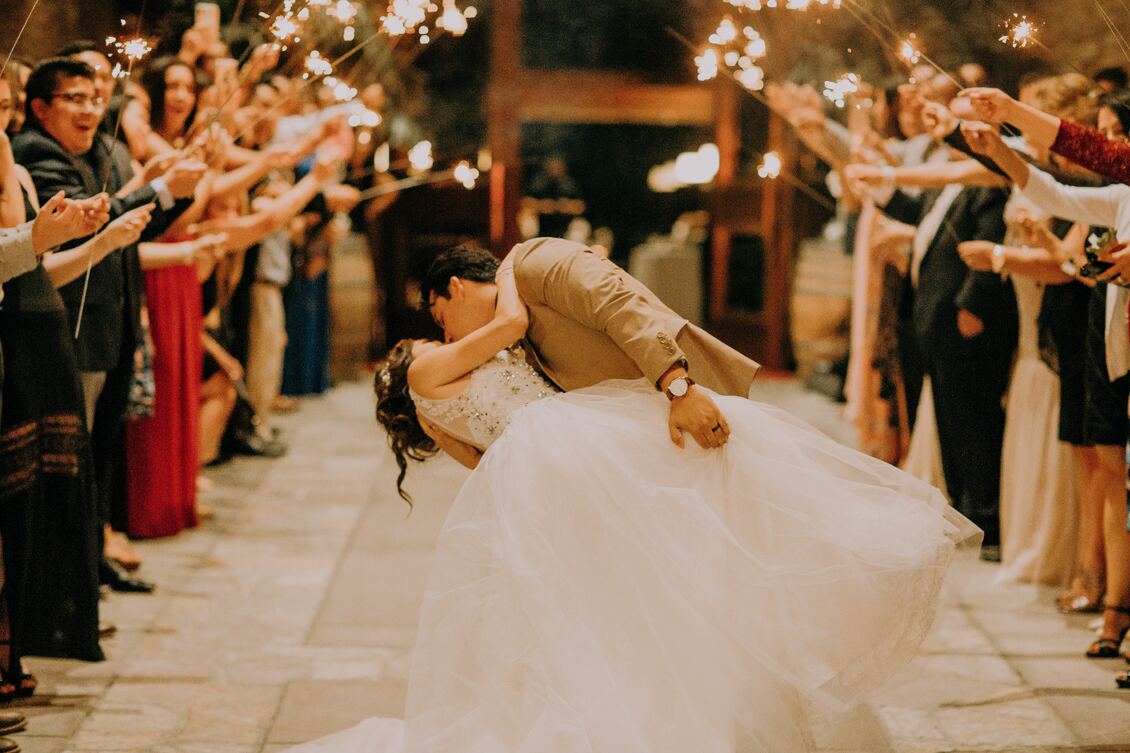
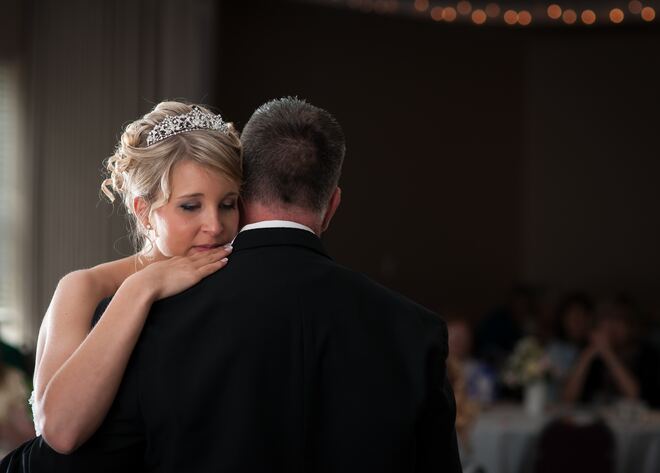
- Waltz: Romantic and flowing, with characteristic rise and fall. The foundation of all ballroom dancing and the most popular wedding first dance choice.
- Tango: Sharp, staccato, and dramatic. The only ballroom dance without rise and fall. It stalks across the floor with cat-like precision.
- Viennese waltz: The waltz on fast-forward, spinning, fast and thrilling to watch.
- Foxtrot: Smooth, sophisticated, and jazzy. Think Fred Astaire and Ginger Rogers gliding across the floor.
- Quickstep: Lively and buoyant with hops, kicks, and syncopated footwork. A joy to dance once you master the basics.
Key differences at a glance
| Latin | Ballroom | |
|---|---|---|
| Hip movement | Essential (Cuban motion) | Minimal |
| Frame | Flexible, open positions | Strong, closed hold |
| Energy | Passionate, rhythmic | Elegant, flowing |
| Floor use | Mostly stationary | Travelling around floor |
| Shoes | Strappy, lower heel | Closed-toe, higher heel |
| Music | Latin, pop, rock | Classical, jazz, swing |
Which style suits your personality?
In my experience, certain personality types gravitate naturally:
- Choose Latin if you love music with a strong beat, enjoy being expressive, and want a high-energy workout.
- Choose Ballroom if you appreciate grace and elegance, enjoy the idea of gliding across a floor, and want something that feels refined.
- Choose both if you want to become the most versatile dancer in the room, and learning both makes you better at each.
My recommendation
Try both. Call for a free 15-minute chat and we'll match you to a first style. Classes available in English, French, and Russian. To go deeper, read about the dramatic paso doble, the elegance of the waltz, and how dance classes in Montreal differ by style.
Find your dance style
Call for a free 15-minute chat. Tell us your goals and we'll point you to the right class.
Alina Litvak, Founder of Quartier Latin Dance Studio
Two-time Canadian Vice-Champion • 19 Years Teaching Experience