Paso doble: the dramatic dance of theater and passion
Step into the arena with the most theatrical Latin dance, where every movement tells a story of power and passion.
Quick answer
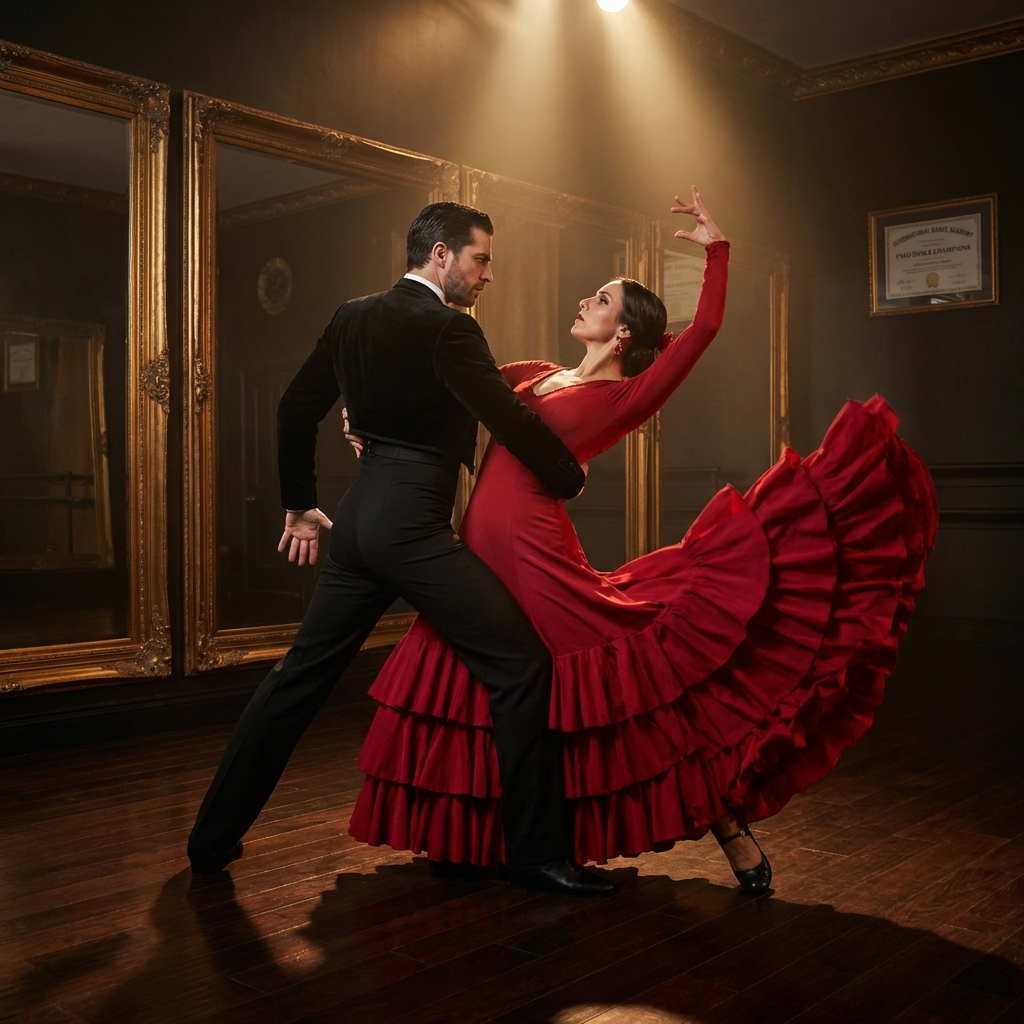
What is paso doble? Paso doble is a dramatic Latin dance inspired by the Spanish bullfight. The leader represents the matador, the follower represents the cape (or sometimes the bull), and the dance is a powerful display of strength, pride, and theatrical expression.
Paso doble is unlike any other dance. It's not about romance or flirtation. It's about power, drama, and the ancient ritual of the Spanish corrida. When you dance paso doble, you don't just move; you perform. After 19 years of teaching all five International Latin dances, paso doble remains the one that transforms students the most dramatically. Shy, reserved people discover an inner matador they never knew they had.
Despite its Spanish character, paso doble as a ballroom dance actually originated in southern France. The term "paso doble" means "double step" in Spanish, referring to the march-like basic movement. The music builds, the cape swirls, and for a few minutes, you become the hero of your own arena.
The characters in paso doble
What makes paso doble unique is that each partner plays a specific role:
- The Leader (Matador): Strong, proud, commanding, the hero of the arena. Every step is deliberate, every movement drips with confidence. The matador doesn't follow the music; the matador commands it.
- The Follower (Cape): Dramatic, flowing, sometimes resistant, an extension of the matador's will. The cape role requires incredible control, creating sweeping shapes that accent the matador's movements.
- Occasionally the Bull: In certain choreographed moments, the follower can represent the bull, charging forward, powerful, and untamed, adding layers of drama to the performance.
This character work is what draws people to paso doble. If you enjoy theater, martial arts or any form of expressive performance, you may love this dance.
The paso doble basic
The March (Sur Place):
- March in place with strong, flat steps, each one landing with intention
- Weight forward, chest proud, chin lifted, embody the matador
- Arms in strong Spanish position, firm and angular, never limp
- Each step lands on the beat with authority
Unlike every other Latin dance, paso doble uses a heel lead, you step onto a flat foot rather than the ball. This creates the strong, grounded, marching quality that defines the dance. The posture is also unique: while other Latin dances feature hip action and flexible torsos, paso doble demands a rigid, upright body with the weight pressing forward.
Common paso doble mistakes
Dancing with "Latin hips." Paso doble does NOT use Cuban motion or hip action. The body is held rigid and proud. Fix: Think military march, not salsa party.
Weak posture. Paso doble requires the strongest frame of any Latin dance. Slouching destroys the character. Fix: Imagine a steel rod from your tailbone to the crown of your head. Lift from the chest.
Smiling. This is one of the only dances where smiling is actually wrong! The matador expression is proud, intense, and focused. Fix: Practice in a mirror, chin slightly lifted, eyes focused, expression fierce but not angry.
Missing the musical peaks. The peaks are the climactic moments of the bullfight. You must hit them with dramatic shapes. Fix: Listen to "España Cañí" repeatedly until you feel each peak approaching.
Famous paso doble music
All paso doble music follows the structure of the Spanish bullfight, with dramatic peaks at specific points:
- "España Cañí": The quintessential paso doble, used in almost every competition
- "El Gato Montés": Dramatic and powerful
- "Amparito Roca": Bright, festive, with clear musical structure
- "Capea": Modern paso doble with cinematic intensity
Why learn paso doble
- Builds confidence: The powerful posture and character work change how you carry yourself on the dance floor and in everyday life
- Theatrical expression: Learn to tell a story through movement and project emotion physically
- Competition essential: Required for all International Latin competitions
- Unique experience: Nothing else in ballroom dance compares. It's the only dance where you play a character with a narrative arc
At our Montreal studio, we teach paso doble in English, French, and Russian. Whether you're preparing for competition or simply want to experience the most powerful dance in the Latin repertoire, paso doble will change the way you move and the way you see yourself. If you are weighing it against other styles, see how Latin and ballroom dancing differ.
Enter the arena
Experience the drama of paso doble with expert instruction.
Alina Litvak, Founder of Quartier Latin Dance Studio
Two-time Canadian Vice-Champion • 19 Years Teaching Experience