Argentine tango: the dance of intensity and connection
Master the world's most passionate dance and discover why tango is as much a conversation as it is a dance.
Quick answer
What is tango? Argentine tango is an improvisational partner dance born in Buenos Aires, characterized by close embrace, detailed footwork, and deep emotional connection. Unlike ballroom tango, Argentine tango is danced in the moment: no two dances are ever the same.
If there is one dance that changes the way people see the world, it's tango. After 19 years of teaching in Montreal, tango turns out to be something far deeper than steps and choreography. It's a conversation without words, a meditation in motion, and one of the most rewarding things you'll ever learn.
Tango was born in the immigrant neighborhoods of Buenos Aires in the late 1800s, emerging from a melting pot of African rhythms, European melodies, and indigenous traditions. It was the music of the marginalized, the dance of longing, hope, and raw human connection. From the cramped dance halls of La Boca, it spread across the globe and today remains one of the most respected and emotionally rich social dances in the world.
Argentine tango vs. ballroom tango
There's an important distinction every new dancer should understand: Argentine tango and International ballroom tango are very different dances, even though they share a name. Argentine tango is improvisational, intimate, and focuses entirely on the connection between partners. There are no set routines: you create the dance together in real time, responding to the music and to each other.
Ballroom tango, on the other hand, is choreographed, dramatic, and performed for competition with exaggerated head snaps, staccato movements, and a more rigid frame. Both are beautiful, but they feel completely different. At our studio, we teach Argentine tango because we believe the improvisational nature teaches you skills that go far beyond the dance floor: listening, trust, and presence.
The tango embrace
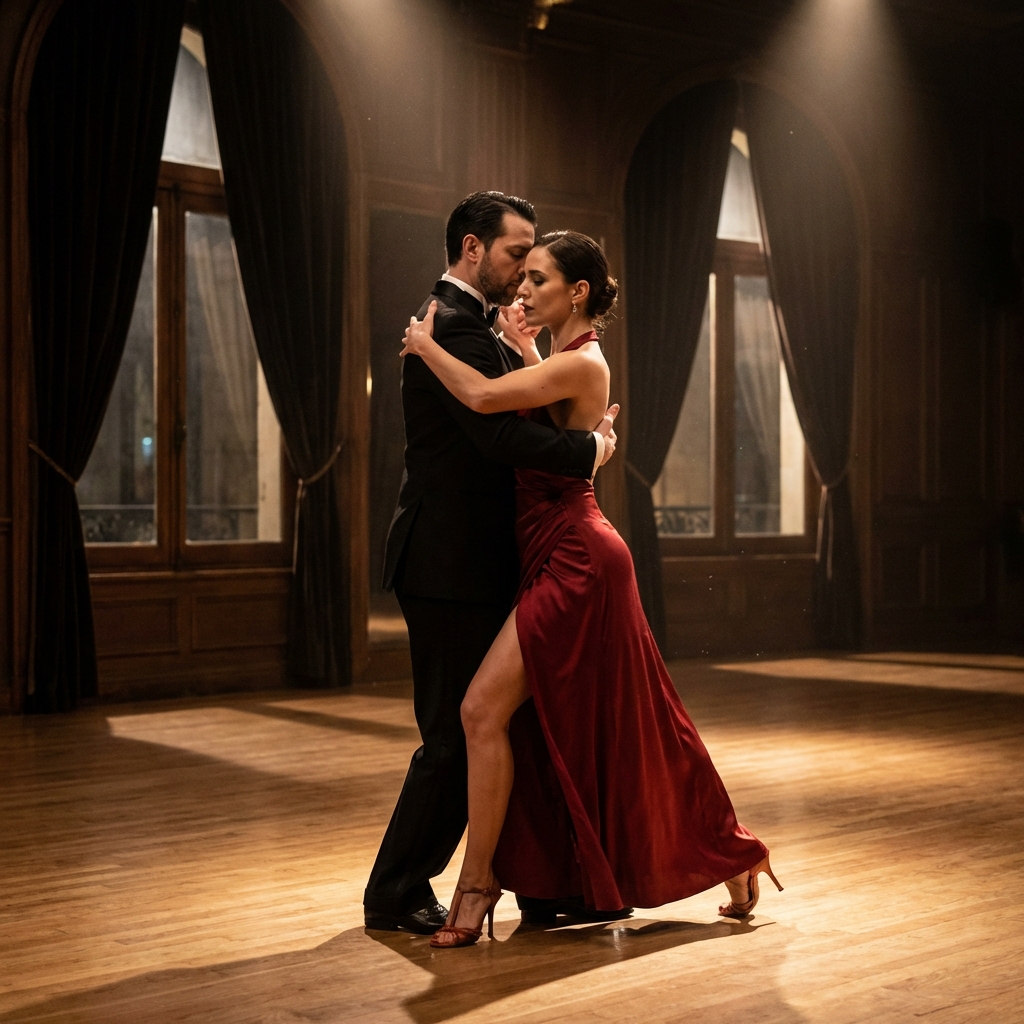
In tango, the embrace (abrazo) is everything. Before you learn a single step, you learn how to hold and be held. The quality of your embrace determines the quality of your dance, period. There are two main styles:
- Close embrace (milonguero): Chest-to-chest connection, intimate and traditional. This is the style danced in the milongas of Buenos Aires, and it's where the deepest connection happens.
- Open embrace (salon): More space between partners, allowing for complex figures like boleos and ganchos. Great for developing technique and visual flair.
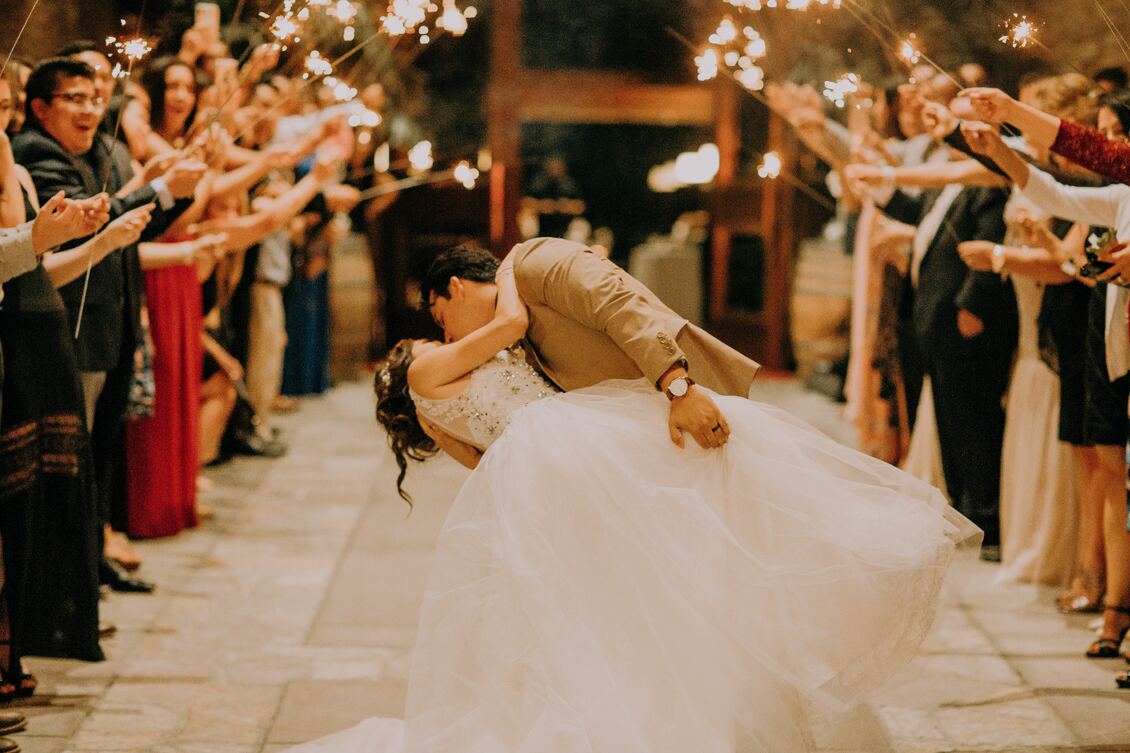
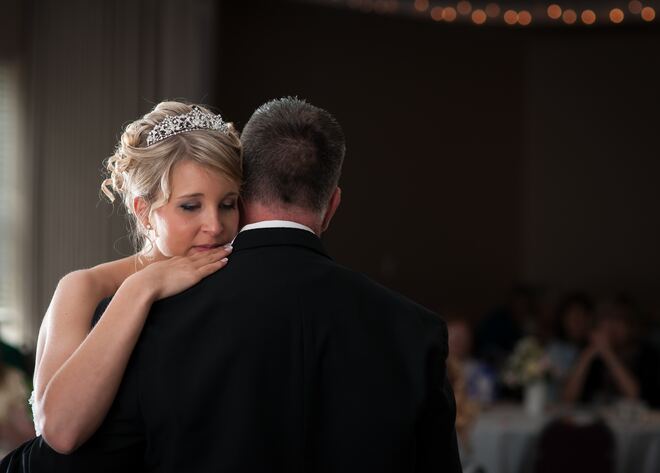
I always start beginners in a relaxed close embrace. It might feel unfamiliar at first (we're not used to being that close to someone we just met but within minutes, students realize that the embrace is what makes tango feel so different from every other dance. It's the channel through which every intention, every pause, and every step is communicated.
Basic tango elements
Core Movements:
- The Walk (Caminata): The foundation: elegant, grounded walking in embrace. A good tango walk takes months to refine, and experienced dancers never stop polishing it.
- The Pause (Pausa): Intentional stillness that creates drama and musical expression. In tango, what you don't do is as important as what you do.
- The Cross (Cruzada): The follower crosses one foot over the other, one of the first figures every tango dancer learns.
- The Ocho: Figure-eight patterns, forward or backward, that develop the follower's pivot and the leader's ability to guide rotation.
What makes tango unique is that these elements are building blocks, not a routine. Once you understand the walk, the pause, the cross, and the ocho, you can combine them in infinite ways. Every song becomes a new improvisation, every partner a new conversation.
Common tango mistakes
After nearly two decades of teaching tango to Montreal students, these are the patterns I see most often:
Looking down at your feet. Your feet know where the floor is: trust them. Looking down breaks your posture and disconnects you from your partner. Fix: Keep your chin level and let your body awareness guide your steps.
Using your arms to lead. Tango is led from the chest and torso, not the hands. Pushing and pulling with arms creates tension and confusion. Fix: Initiate movement from your centre, your partner will feel it through the embrace.
Rushing through the music. Beginners often try to step on every beat. Tango is one of the only dances where stillness is encouraged. Fix: Listen to the music first. Step only when the music invites you to. Some of the most powerful moments in tango are the pauses.
Taking steps that are too large. Big steps look dramatic, but they throw off your balance and your partner's balance. Fix: Keep your steps small and controlled, especially at the beginning. Elegance in tango comes from precision, not size.
Tango etiquette (códigos)
Tango has a rich set of social codes called códigos that have been passed down for generations. Understanding them will make you feel confident at any milonga (tango social dance):
- The Cabeceo: The traditional way to invite someone to dance: a subtle nod and eye contact from across the room. It's elegant and avoids the awkwardness of verbal rejection.
- The Tanda: Dances are grouped in sets of 3-4 songs (a tanda). You dance the full tanda with one partner, then a short musical break (cortina) signals a change of partners.
- Line of Dance: On a crowded floor, couples move counter-clockwise around the room. Respect the flow: don't cut across the floor or dance in one spot.
- Thank your partner: A simple "thank you" at the end of a tanda is the polite signal that the set is complete.
Classic tango music
The music is the soul of tango. Here are the essential artists and songs every dancer should know:
- "La Cumparsita": The most famous tango ever written, composed in 1917 and still played at every milonga in the world
- "Por Una Cabeza" by Carlos Gardel: The voice of tango, featured in Scent of a Woman and True Lies
- "Libertango" by Astor Piazzolla: The piece that revolutionized tango and bridged classical and modern styles
- "El Choclo": A traditional milonga favorite with an irresistible rhythm
- Orquesta de Juan D'Arienzo: Known as "El Rey del Compás" (The King of the Beat), his recordings are the heartbeat of traditional milongas
- Osvaldo Pugliese: Dramatic, emotional, and perfect for dancers who love expressive, slow-building tangos
Tango for mind and body
Tango is a remarkable full-body workout that also sharpens your mind. The constant weight shifts, pivots, and controlled walking engage your core, legs, and stabilizing muscles throughout the entire dance. The sustained movement works your cardiovascular system, balance, and coordination.
But the mental benefits are equally powerful. The dance demands total presence: when you're in the embrace, actively listening to the music and your partner, there's no room for worrying about work or daily life. Tango can feel like the most meditative hour of your week. Classes are available in English, French, and Russian.
Why learn tango
Tango develops skills unlike any other dance: active listening, subtle communication, presence, and emotional expression. Many dancers find it becomes a meditation, a way to connect deeply with another person without words. Whether you come for the fitness, the social scene, or the sheer beauty of the dance, tango has a way of becoming a part of your life that you never expected. If you're heading to a milonga, read how to ask someone to dance without the awkwardness, and for another close partner dance, see how sensual and traditional bachata differ.
Experience the passion of tango
Learn Argentine tango in Montreal with expert instruction.
Alina Litvak, Founder of Quartier Latin Dance Studio
Two-time Canadian Vice-Champion • 19 Years Teaching Experience