Studio vs. screen: the mistakes a video can't see
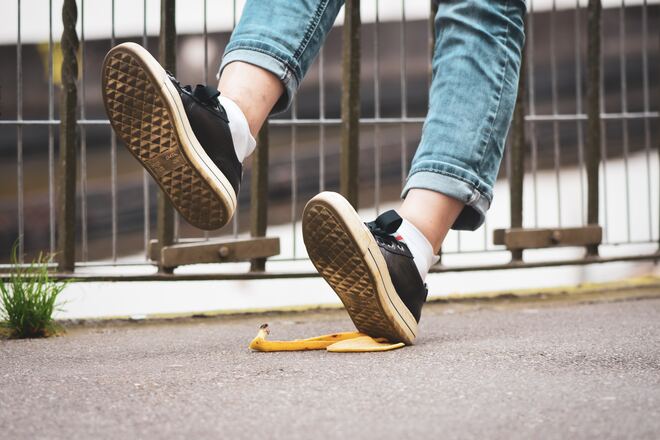
Learning from a video feels safer: nobody sees you miss a step. The catch is that nobody sees you at all, so the missed step stays missed. There's a way to get a teacher's eye without a room watching.
Quick answer
Should I learn to dance online or in person? For partner dances like salsa and bachata, learn in person and use video between classes. A screen is fine for solo drills, music and ideas. It can't correct your weight or timing, and it can't give you a partner to lead or follow.
Videos are free, open at midnight and never judge you. That's a real advantage. But partner dancing is learned through your feet and your hands, and a video only reaches your eyes.
Five ways to learn, side by side
"Online" runs from a free clip to a live class on a video call. This is what each one actually gives you.
| Way to learn | Someone watches you? | A partner to dance with? | Lessons in order? | Best for |
|---|---|---|---|---|
| Free videos (YouTube, TikTok) | No | No | No | Ideas, inspiration, reviewing a move you already learned |
| Paid app or recorded course | No | No | Usually | Solo drills and footwork in a set order |
| Live class on a video call | Partly, through your camera | Only if you have one at home | Usually | Solo styles and fitness when you can't travel |
| In-person group class | Yes | Yes, partners rotate | Yes | Learning partner dancing with other people |
| In-person private lesson | Yes, only you | Come alone or as a couple | Yes, built around your goal | Fixing specific habits, a wedding dance, a fast start |
The first three columns are where partner dancing is won or lost. Only the bottom two rows answer yes to all of them.
What a screen can't give you
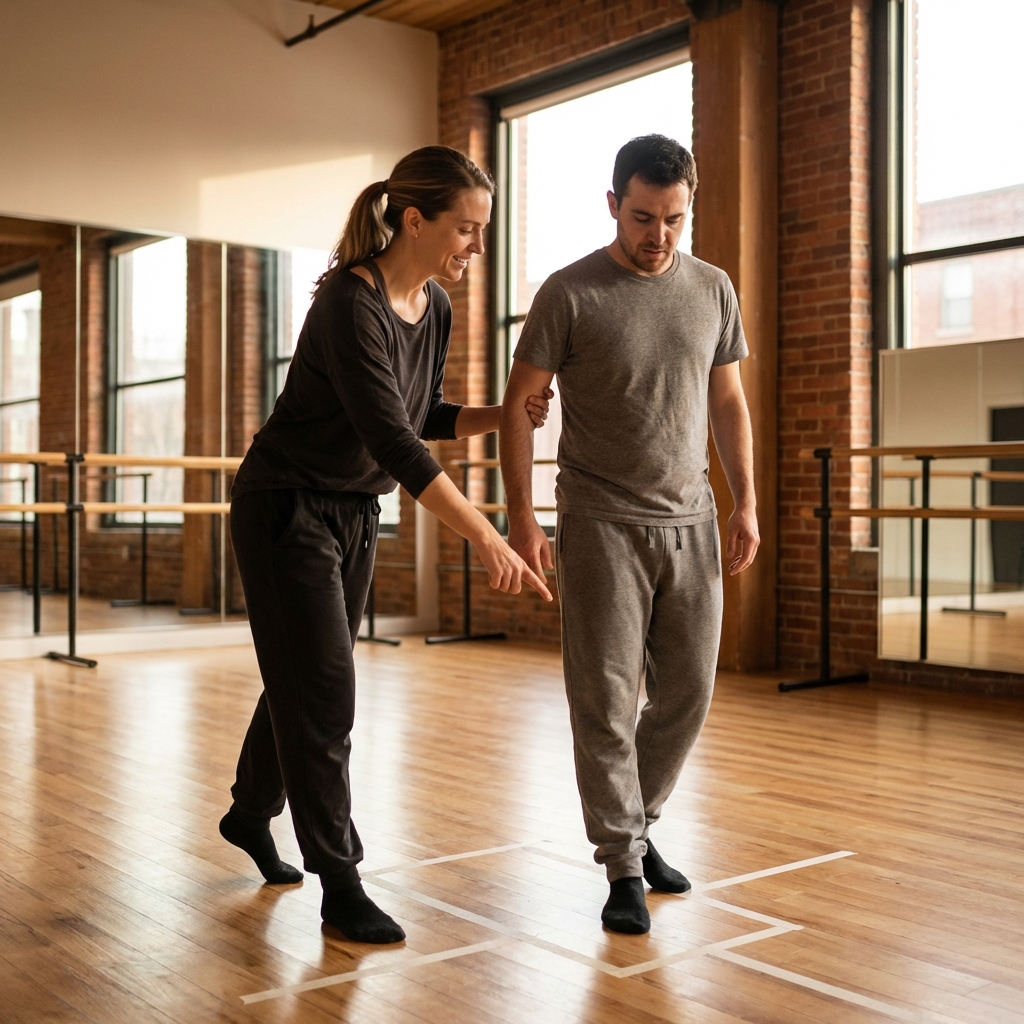
Correction while you move. Practising alone in your living room, nobody tells you that your weight is on the wrong foot, your frame is collapsing, or you're one beat late every time. You can watch a tutorial 50 times and practise the same mistake 50 times. Practise it wrong for months and it has to be taken apart before it can be rebuilt. In a studio, your teacher sees it while you're still moving, and the fix is often one word: "softer", "later", "breathe".
A real partner. Leading and following run on touch: the pressure of a hand, a shift of weight, timing passed through the frame. You can copy a step from a video, but you can't feel a lead from a chair or a doorframe. In our group classes, partners rotate, so you learn how the move feels with many different people.
People who expect you. A weekly class puts dance on your calendar and puts familiar faces in the room. Alone with an app, skipping a week costs nothing, and that's exactly why it's easy to stop.
Where online actually helps
Video earns its place between classes:
- Reviewing a move you learned in class: you already know how it should feel, so the video jogs your memory instead of teaching you something new.
- Training your ear: playlists and counting videos help you find the 1 in salsa and bachata music. Try our rhythm exercises for beginners.
- Solo technique: footwork, body movement and balance work well alone. Our 15-minute home practice routine lays one out.
- Inspiration: watching performances shows you where the basics lead.
Just don't let video be your teacher. YouTube instructors teach different techniques and counts, often without saying so, and a beginner can't tell a style choice from a mistake.
If the camera feels safer
Maybe the real draw of video is that nobody watches. Nervous is normal. We're good at that part. Our beginner salsa and bachata class goes one step at a time and starts from zero, so nobody is expected to know anything. If even that feels like too much, private lessons let you find your feet with no one watching, then bring them to class or a social night.
Alina teaches every class herself, after 19 years of teaching, in English, French and Russian. Call 514-966-3736 and tell us what you've learned so far, or that you're starting from nothing.
Already learning from videos? Moving to a studio
Nothing you learned is wasted. Your ear for the music and the step names come with you. To make the move smooth:
- Write down what you know. The styles, the steps and the moves you can do without the video. It makes your free 15-minute call quick.
- Expect the basics to change. Frame, weight and timing are what video can't check. Being asked to slow down on them doesn't mean starting over.
- Pick group or private. The beginner group class teaches salsa and bachata from the first step, with partners. A private lesson works on exactly what you want to fix, so you walk into group class ready.
Use both: a simple weekly plan
- In the studio, once or twice a week: new material, correction and partner practice.
- The day after class: find a video of the move you just learned and walk through it slowly, while the feeling is fresh.
- Most days, a few minutes: music on, count it out loud, do your basic step.
- Once you have the basics: go to a social night and dance with people you don't know.
Curious what the first months look like this way? Read from zero to your first social. For one-on-one time, see what private lessons can offer.
Questions about online vs. in-person lessons
Can I learn salsa or bachata online without a partner?
You can learn the solo footwork and the rhythm. Leading and following only come with another person's hands in yours, so plan on a studio for that part.
Is a live video-call class better than a recorded one?
For solo work, yes: a teacher sees you through the camera and can call out a correction. The camera shows one angle and no partner, so for partner dancing it's still a step short of a room.
I've learned moves from videos. Do I still start in the beginner class?
Tell us what you've learned on the free 15-minute call. We'll suggest where to start, and that may be a private lesson to check your basics first.
Do I need to bring a partner to a studio class?
No. Come alone. Partners change throughout the class, so everyone dances with everyone.
Let a teacher see what the video can't
Starting from a screen is fine. Tell us how you've been learning, from videos or not at all, and we'll suggest the right first step, private or group.
Alina Litvak, Founder of Quartier Latin Dance Studio
Two-time Canadian Vice-Champion • 19 Years Teaching Experience