How dance reduces stress and anxiety
Your cortisol doesn't stand a chance against a good salsa song.
Quick answer
Does dancing actually reduce stress? Yes. Dance combines movement, music, other people and full attention in one hour, which is why people tend to leave class lighter than they arrived. Exercise, music and company each ease stress on their own. Dance gives you all three at once.
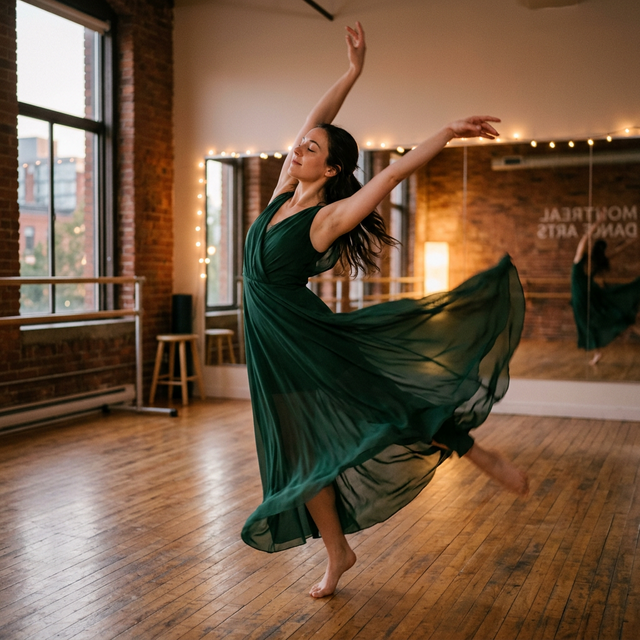
I've been teaching dance in Montreal for 19 years, and and the class night does something a day off does not: you arrive carrying the weight of your day and you leave lighter. Looser. Smiling without trying.
A weekly class can feel like therapy you actually enjoy. Here is why it works.
Why dance calms a busy mind
Three things happen when you dance, and each one works against stress.
Cortisol drops
Cortisol is your body's main stress hormone, and steady movement helps bring it down. The difference with dance is that you actually enjoy it, so you keep showing up. The workout you stick with beats the one you skip.
Endorphin and serotonin surge
Dance triggers the release of endorphins (your body's natural painkillers) and serotonin (the "feel-good" neurotransmitter). But unlike a solo run on a treadmill, partner dancing adds another layer: social touch and connection release oxytocin, the bonding hormone. Together they give you a "dance high." The same movement also builds brain health and neuroplasticity over time.
The prefrontal cortex gets a break
Stress often comes from rumination: the prefrontal cortex endlessly replaying worries about the future or regrets about the past. Dance interrupts this loop because it demands present-moment attention. You can't think about tomorrow's deadline while counting "5-6-7-8" and trying to remember your cross-body lead. Running leaves your mind free to wander. Dance gives it a job.
Why dance beats the gym for stress relief
I have nothing against gyms. But when it comes specifically to stress management, dance has four advantages a treadmill can't match:
- Music. You're not just moving. You're moving to music. Music independently reduces cortisol and lowers blood pressure. Combine music with movement and you get a compounded effect that silent gym workouts can't replicate.
- Social connection. Loneliness and social isolation are major drivers of chronic stress. Group classes build real community. Friends made on the dance floor are a real stress buffer.
- Creative expression. Stress often comes from feeling trapped or constrained. Dance gives you a physical outlet for emotional expression. There's a reason people across every culture in human history have danced during times of joy AND times of hardship. It's a primal release mechanism.
- No performance pressure. Unlike competitive sports, social dancing has no scoreboard. There's no "losing." The only goal is connection and enjoyment, which removes the performance anxiety that makes some exercise routines actively increase stress.
What a regular class does for you
Here is what a regular class can add to your week:
- Better sleep. Physical effort plus emotional release makes class nights easier to wind down from.
- Reduced reliance on coping mechanisms. A night out on the dance floor can replace a night of reaching for old coping habits.
- Improved work performance. When you're less stressed, you think more clearly. A clearer head after class often carries into the work week.
- Emotional regulation. Dance teaches you to stay calm under pressure (try executing a complicated turn pattern while staying relaxed: it's a master class in managing your stress response). That calm carries into the rest of your life.
The Montreal advantage
Montreal winters are long and dark, which is hard on your mood. A regular indoor activity that moves your body and puts you around people is a real help. You don't need to wait for warmer weather to start. Our studio is open year-round, and the music inside makes you forget it's minus twenty outside.
The best dance styles for stress relief
Every dance style reduces stress, but some hit different notes:
- Salsa: High energy, fast music, intense social connection. Best for burning off acute stress and anxiety.
- Bachata: Slower, sensual, deeply musical. Best for emotional release and relaxation.
- Waltz: Flowing, meditative, elegant. Best for calming a racing mind.
- Cha Cha: Playful, rhythmic, joyful. Best for lifting mood and breaking out of a funk.
Not sure which suits you? Try a few and see which one your body responds to. Your stress has a personality: find the dance that matches it.
How to start (even if you're stressed about starting)
The irony of using dance for stress relief is that the idea of starting can itself feel stressful. What if I'm terrible? What if people judge me? What if I step on someone's foot? These worries are universal, and they fade fast once the music starts. At Quartier Latin, our beginner classes are made for people who have never danced before. No judgement, no pressure, just music, movement and a good reason to look forward to your week. If shyness is the hurdle, see how dance quietly builds real confidence.
Trade your stress for a dance
Start with a free 15-minute call. Tell us what stresses you out and we will point you to the right class.
Alina Litvak, Founder of Quartier Latin Dance Studio
Two-time Canadian Vice-Champion • 19 Years Teaching Experience