♪♫♪♫♪
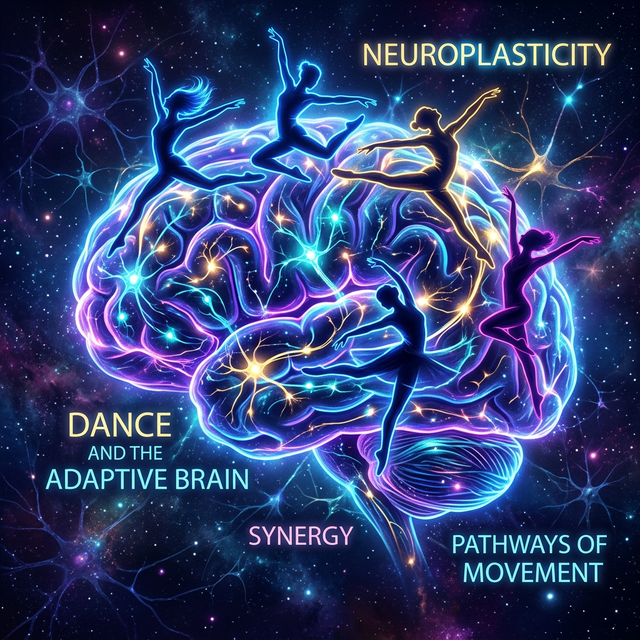
Brain visualization with dance and neuroplasticity concepts

Dance and Brain Health: Why Neurologists Recommend Dancing

The best brain exercise isn't a crossword puzzle. It's a salsa class.

⚡ Quick Answer

Why is dance good for the brain? Dance is the only physical activity proven to reduce dementia risk (by 76% according to the New England Journal of Medicine). It works because dance uniquely combines cardiovascular exercise, complex motor skills, rapid decision-making, social interaction, musical processing, and spatial navigation — simultaneously stimulating more brain regions than any other single activity.

When neurologists and cognitive scientists are asked "what's the single best thing you can do for brain health?", an increasing number of them give a surprising answer: dance. Not brain-training apps. Not Sudoku. Not meditation. Dance.

At Quartier Latin Dance Studio in Montreal, I've been teaching dance for 19 years, and while I originally fell in love with dance for its beauty and joy, the neuroscience has given me an entirely new reason to be passionate about what I do. Dance isn't just art — it's medicine for the brain.

The Research That Changed Everything

The landmark study came from the Albert Einstein College of Medicine, published in the New England Journal of Medicine. Researchers tracked 469 seniors over 21 years to determine which activities — physical and cognitive — had the strongest protective effect against dementia. The results were stunning:

  • Reading: 35% reduced risk
  • Crossword puzzles (4 days/week): 47% reduced risk
  • Bicycling/Swimming: 0% reduced risk
  • Golf: 0% reduced risk
  • Dancing frequently: 76% reduced risk

No other activity — physical or cognitive — came close to dance's protective effect. Not cycling. Not swimming. Not golf. Dancing was in a category of its own.

Why Dance Is Unique for the Brain

1. Multi-System Integration

Most activities engage the brain partially. Reading works language and imagination. Exercise works motor control. Music engages auditory processing. Dance does all of these simultaneously — plus spatial navigation, social cognition, emotional processing, and real-time decision-making. This whole-brain engagement creates new neural pathways and strengthens existing ones across multiple brain regions at once.

2. Neuroplasticity Through Split-Second Decisions

Neuroplasticity — the brain's ability to rewire itself — is strongest when you're making rapid decisions in response to changing conditions. Social dancing demands this constantly: the leader is choosing moves in real-time, the follower is interpreting signals instantly, both are responding to unexpected musical changes. This continuous decision-making stream builds what neuroscientists call "cognitive reserve" — a buffer against age-related cognitive decline.

3. Increased Hippocampal Volume

The hippocampus is the brain region responsible for memory and spatial navigation — and it's one of the first areas affected by Alzheimer's disease. Research published in Frontiers in Human Neuroscience found that dancers had significantly larger hippocampal volumes than non-dancers, and that dancing increased hippocampal volume in older adults. This is remarkable because the hippocampus typically shrinks with age — dance appears to reverse this process.

4. BDNF Production

Brain-Derived Neurotrophic Factor (BDNF) is a protein that promotes the growth of new neurons and strengthens existing ones — essentially, it's fertilizer for the brain. Exercise increases BDNF production, but dance increases it more than conventional exercise, likely because of the additional cognitive demands. Higher BDNF levels are associated with better memory, faster learning, and reduced risk of neurodegenerative diseases.

Dance vs. Other Brain-Training Activities

  • Crossword puzzles and brain apps: These improve specific cognitive skills but don't create the multi-system integration that generates new neural pathways across the brain.
  • Learning a language: Excellent for brain health, but doesn't include the physical exercise component that boosts BDNF and cardiovascular health.
  • Learning an instrument: Strong for brain health (motor + auditory + cognitive), but lacks the social interaction and physical exercise elements.
  • Dance: Combines physical exercise + motor learning + musical processing + social interaction + real-time decision-making + spatial navigation + emotional processing. No other activity matches this combination.

What This Means for You

Whether you're 25 or 75, the brain health benefits of dance are relevant. For younger adults, dance builds cognitive reserve — essentially banking brain capacity that protects you in later decades. For older adults, dance actively promotes neuroplasticity and can reverse age-related cognitive decline that has already begun.

At Quartier Latin Dance Studio, we welcome students of every age. Our youngest students are children; our oldest are in their 70s and 80s. And every one of them is building a healthier brain with every step, turn, and musical interpretation.

The Best Dance Styles for Brain Health

All dance is beneficial, but social partner dancing (salsa, bachata, tango, swing) provides the greatest brain benefit because it adds the improvisation and partner-communication elements that require the most rapid decision-making. Choreographed routines are also beneficial, but the reduced need for real-time decisions means slightly less neuroplastic stimulation.

The very best approach: learn multiple styles. The novelty of learning different dance patterns, different rhythms, and different movement vocabularies maximizes neuroplastic stimulation.

Invest in Your Brain's Future

Dance fitness at Quartier Latin — where every class is a full-brain workout disguised as the best time of your week.

Explore Dance Fitness

— Alina Litvak, Founder of Quartier Latin Dance Studio

Two-time Canadian Champion • 19 Years Teaching Experience