Musicality in dance: how to feel the music
The difference between dancing to the beat and dancing with the music.
Quick answer
What is musicality in dance? Musicality is the ability to interpret and express music through your movement, going beyond the beat to respond to the melody, dynamics, accents, and mood of a song. It's what separates someone who knows steps from someone who dances. And yes, it can be learned.
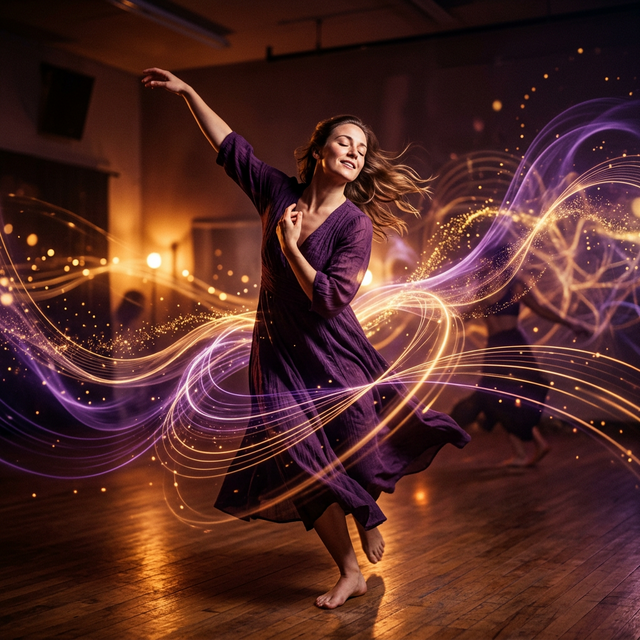
There's a moment in every dancer's journey that I live for as a teacher. It's the moment when a student stops counting beats and starts hearing music. When their body responds to a rise in the melody without being told to. When they slow down during a soft passage and accelerate through a crescendo, not because they learned a choreographed routine, but because the music moved them. Literally.
At Quartier Latin Dance Studio in Montreal, I've spent 19 years helping students cross this threshold. It's the single most transformative skill in dance, and it separates competent dancers from magnetic ones. Below: how musicality works and how you can build it.
The three layers of dance music
Most beginners hear music as a single stream of sound. Developing musicality means learning to hear three distinct layers:
Layer 1: the beat (the foundation)
This is where every dancer starts: finding and stepping on the beat. The beat is the consistent pulse that runs through the entire song, like a heartbeat. In salsa, you step on beats 1-2-3, pause on 4, step on 5-6-7, pause on 8. In bachata, you step on every beat: 1-2-3-tap.
Being "on beat" is essential, but it's the minimum requirement. Stepping only on the beat is like reading only the words of a poem without hearing the rhythm, the pauses, or the emotion. It's technically correct but emotionally flat.
Layer 2: the melody (the emotion)
The melody is the tuneful, singable part of the music: the vocals, the lead instrument, the recognizable theme. Interpreting the melody means adjusting your movement to reflect what the melody is doing. When the singer holds a long, sustained note, you might slow your movement and hold a dramatic frame. When the melody spirals upward with energy, you might add a spin or extend your arms. This is where personal expression enters your dancing.
Layer 3: the accents and dynamics (the conversation)
This is the advanced layer: hearing the horn hits, the percussion breaks, the sudden silences, the crescendos, and responding to them in real-time. This is what makes dancers look like they're having a conversation with the music rather than just walking alongside it. A sudden pause in the music matched with a dramatic stop in your movement. A trumpet accent matched with a sharp body isolation. These moments of synchronization between dancer and music are what make audiences gasp.
How to develop musicality (practical exercises)
Exercise 1: Listen before you move
Before dancing to a song, listen to it three times without moving. First listen: just enjoy it. Second listen: identify the beat and the melody separately. Third listen: notice the accents, the breaks, the moments where the energy shifts. By the time you step onto the floor, you'll have a mental map of the song that your body can navigate.
Exercise 2: Dance three ways to one song
Play the same song three times. First time: dance only on the beat: strict timing, no embellishment. Second time: dance to the melody: let your movements rise and fall with the vocal line. Third time: dance to the accents: respond to the percussion hits, the instrumental breaks, the surprises. This exercise teaches your body to access each musical layer independently.
Exercise 3: The dynamics game
Practice dancing with varying intensity. During quiet passages, make your movements small, smooth, and controlled. During loud passages, make them big, sharp, and energetic. This contrast (the ability to modulate between soft and strong) is the hallmark of a musical dancer.
Exercise 4: Body isolations to accents
Put on a song with clear percussion (any salsa or Latin jazz will work). When you hear a strong accent (a horn hit, a drum break, a vocal emphasis) respond with a body isolation: a shoulder roll, a hip pop, a head turn, or a hand styling. You're training your body to react to musical events in real-time. You can try these on your own, and how to practice dance at home without a partner shows how.
Why some dancers are more musical than others
Musicality is partly natural talent but mostly developed skill. People who grew up listening to diverse music, who played instruments, or who sang tend to have a head start. But even students with no musical background whatsoever develop strong musicality through practice. Even if you call yourself "tone deaf," steady practice trains your ear.
The key is that musicality isn't about having a "musical ear": it's about building a connection between what your ears hear and what your body does. This ear-to-body connection strengthens every time you dance, much like a muscle.
The musicality shortcut: private lessons
In group classes, musicality is taught generally: the whole class responds to the same musical cues. But musicality is deeply personal, and what one dancer hears in a song may be completely different from what another hears. Private lessons at Quartier Latin allow me to identify exactly where your musical interpretation currently is and guide you toward hearing and expressing layers you're currently missing. It's the fastest way to develop this skill, and it's one of the reasons my private students consistently stand out on the social dance floor.
Build your musicality
Private lessons with Alina focus on the artistry behind the steps: learn to feel and express the music.
Alina Litvak, Founder of Quartier Latin Dance Studio
Two-time Canadian Vice-Champion • 19 Years Teaching Experience
- Tags:
- Technique
- Musicality