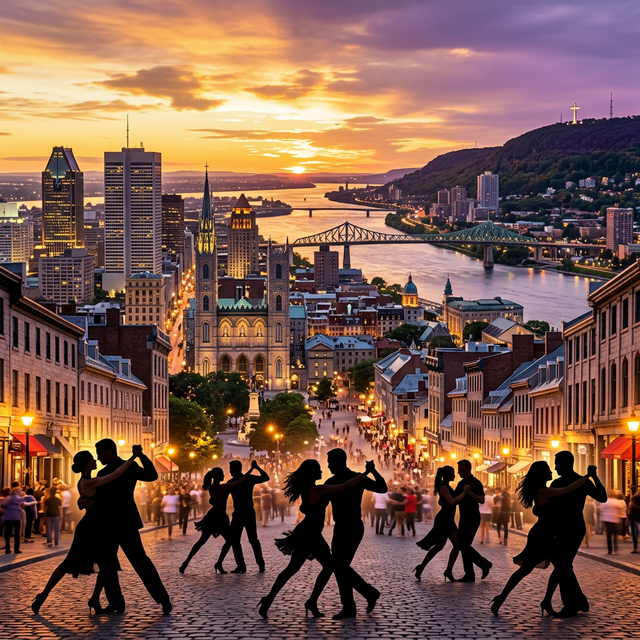
Montreal's dance culture: why this city was made for dancing
There is something in the DNA of this city that makes people move.
Quick answer
Why is Montreal so good for dance? Montreal has an active dance scene thanks to its multicultural population, European-influenced cafe culture, big music festivals (Festival International de Jazz, Nuits d'Afrique), and a social culture that values art, music, and gathering. The city supports salsa, bachata, tango, swing, contemporary, and ballroom communities.
I have taught dance in Montreal for 19 years. Montreal does not have the biggest scene (New York and London are larger) or the oldest tradition (Buenos Aires and Havana win there). What it has is a culture where dance is welcome at a wedding, a festival or a Tuesday night.
Here is why Montreal suits dancing.
The multicultural advantage
Montreal is a multicultural city, and every community brought its dances. Colombian salsa, Dominican bachata, Argentine tango, West African djembe dance, Haitian kompa, Brazilian samba, Irish step, Indian Bollywood, and ballroom traditions from across Europe all coexist on this island.
This means a dancer in Montreal can find many dance traditions in one city, and styles and music mix freely. For salsa in particular, see why salsa classes are so popular in Montreal and the Montreal salsa scene.
The festival factor
Montreal runs on festivals. The Festival International de Jazz de Montreal, Festival Nuits d'Afrique, Festival International de Tango and neighbourhood festivals give you plenty of chances to hear live music and dance.
For dancers, that makes the step from studio practice to a real dance floor short. You learn the steps in class, then take them out into a city full of music.
The social culture
Montreal has cafe culture, terrasse culture, and a tradition of gathering around conversation, art and music. Dance fits that: it is a night out where you actually do something together.
The city's bilingual (and often trilingual) character helps too. Montrealers are used to switching languages, and dance needs no translation.
The dance venues
Montreal offers dance venues for every taste:
- Latin clubs: Downtown and along Saint-Laurent, with live salsa bands and DJ-driven bachata nights
- Tango milongas: Intimate, atmospheric tango events in heritage venues across the Plateau
- Swing nights: Retro swing dances in venues across Mile End and the Plateau
- Studio socials: Studios like Quartier Latin host regular social dance events that blend practice with community
- Outdoor dancing: Summer brings dancing to parks, terrasses, and public squares across the city
Why a dance studio in Montreal is different
Our classes run in English, French and Russian, so students bring the city's mix with them. Each person has their own relationship with rhythm and their own reason for dancing.
That mix is useful in class. Rotating partners teaches you to adapt to different bodies, different ways of hearing the music and different communication styles.
A dance floor for everyone
In Montreal, dance is not an elite hobby. Students, young professionals, families and retirees share the same floor, and there is a class for almost every taste and level.
A dance teacher's view
After 19 years of teaching here, I still find that Montreal welcomes dance the way it welcomes its festivals, its cafes and its long summer evenings.
If you live in Montreal and have not tried dancing yet, the floor is open.
Ready to find your class?
Tell us a little about you on a free 15-minute call, and we will point you to the class that fits.
Alina Litvak, Founder of Quartier Latin Dance Studio
Two-time Canadian Vice-Champion • 19 Years Teaching Experience