Taking dance classes with your partner: what to know first
Thinking of taking dancing classes with your partner? Here's the honest guide to what couples should expect, and how to make it work.
Quick answer
Should couples take classes together? Yes, but with realistic expectations. You'll learn to communicate physically, laugh together, and share a new skill. One partner usually progresses faster. That's normal. The key: don't coach each other. Let the instructor do the teaching.
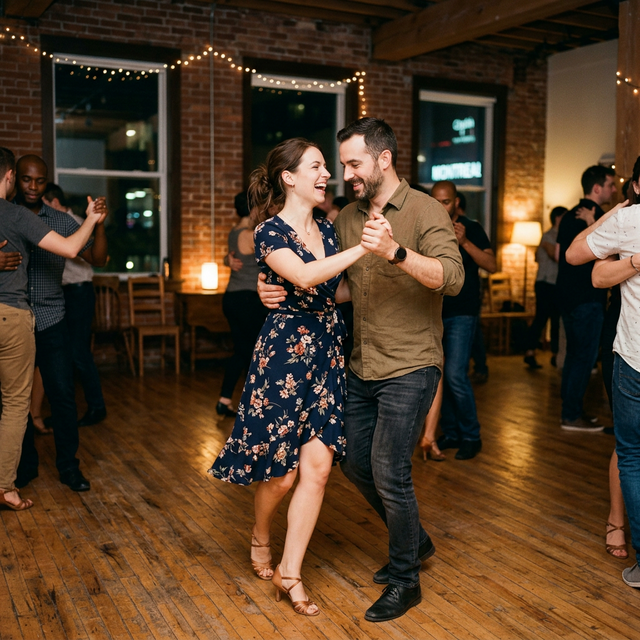
Every weekend, couples walk into Montreal dance studios with the same idea: "We'll take dance classes together. It'll be romantic." And it is, eventually. But the first few classes aren't the movie montage you might be imagining. They're awkward, occasionally frustrating, and absolutely worth it if you approach them with the right mindset.
Couples who thrive in dancing classes follow a few simple principles, and the ones who struggle tend to make the same predictable mistakes.
The biggest couple mistake: teaching each other
This is the number-one source of frustration for couples in dance class, and I need to address it directly: do not teach your partner.
It's common. One partner picks up the step faster, and the natural instinct is to help, "No, you need to step on your left foot." "You're not on the beat." "Try it like this." The problem is that amateur corrections are often wrong or poorly communicated. They create tension, undermine confidence, and short-circuit the learning process.
Your instructor has spent years learning how to communicate dance technique clearly. They can see both of you simultaneously and identify the actual problem, which is often different from what the "faster" partner thinks it is. Let them do their job. Your role as a partner is to be patient, encouraging, and focused on your own technique.
Why one partner may progress faster
In almost every couple, one person picks up the steps more quickly than the other. This is completely normal and has nothing to do with talent or effort. Several factors explain it:
- Prior movement experience: Someone who played sports, took yoga, or did any physical activity will have better body awareness from day one
- Musical background: If one partner grew up playing music, they'll hear the rhythm more easily
- Leader vs. follower roles: In most partner dances, the leader learns more steps initially. The follower's role has different challenges (responding in real-time to subtle cues) that aren't immediately visible
The healthy response: celebrate each other's progress rather than competing. Dancing is not a race, and different learning speeds eventually even out.
The relationship benefits of dancing together
Once you get past the initial learning curve, dancing becomes one of the most relationship-enriching activities a couple can share:
Non-verbal communication improves. Dance teaches you to read your partner's body language, subtle weight shifts, tension in the hands, the direction of movement. Couples who dance together report that this awareness carries over into their daily lives. They become better at sensing each other's moods and needs without a word being spoken.
You learn to lead and follow. Regardless of who leads on the dance floor, the dynamic of "one person proposes, the other responds" builds mutual trust. The leader learns to communicate clearly and gently. The follower learns to be present and responsive. Both roles require respect for the other person.
Shared growth creates bonding. Struggling together and improving together creates a specific kind of closeness that shared entertainment (movies, restaurants) can't match. You're building something together, a skill that belongs to both of you and improves every time you practice.
It's a built-in date night. Instead of spending another evening on the couch debating what to watch, you have a scheduled activity that's active, social, and guarantees physical contact with your partner.
Group classes vs. private lessons for couples
Both formats work well for couples, but they serve different purposes:
Group classes are more affordable and introduce you to other couples, which normalises the learning process. You'll see that every couple struggles with similar things. Partner rotation in group classes is optional for couples, many studios let couples stay together if they prefer.
Private lessons are ideal if you're preparing for a specific event (wedding, anniversary, cruise), if one partner is far more advanced, or if you want faster progress. A private instructor can tailor the curriculum specifically to your dynamic and address relationship-specific challenges like tension or impatience.
Explore our couples dancing classes and private couple's lessons in Montreal. English, French, and Russian instruction available.
Dance together, grow together
The best date night in Montreal. No experience needed.
Alina Litvak, Founder of Quartier Latin Dance Studio
Two-time Canadian Vice-Champion • 19 Years Teaching Experience