How to Practice Dancing at Home as a Couple
Simple ways to reinforce what you learn without needing a studio.
Quick answer
How much should we practice? Even 10–15 minutes, 2–3 times per week, dramatically accelerates your progress. Short, frequent sessions beat long, rare ones every time.
You just had an amazing dance lesson. You nailed the new pattern, the timing felt right, and for a moment everything clicked. Then the week passes, life gets busy, and by the time your next lesson comes around, it's like starting over from scratch.
Sound familiar? This is the single biggest reason couples plateau. They rely solely on weekly lessons without practising between sessions. The good news? Home practice doesn't require a lot of time, space, or equipment. It just requires a little intentionality.
Setting up your space
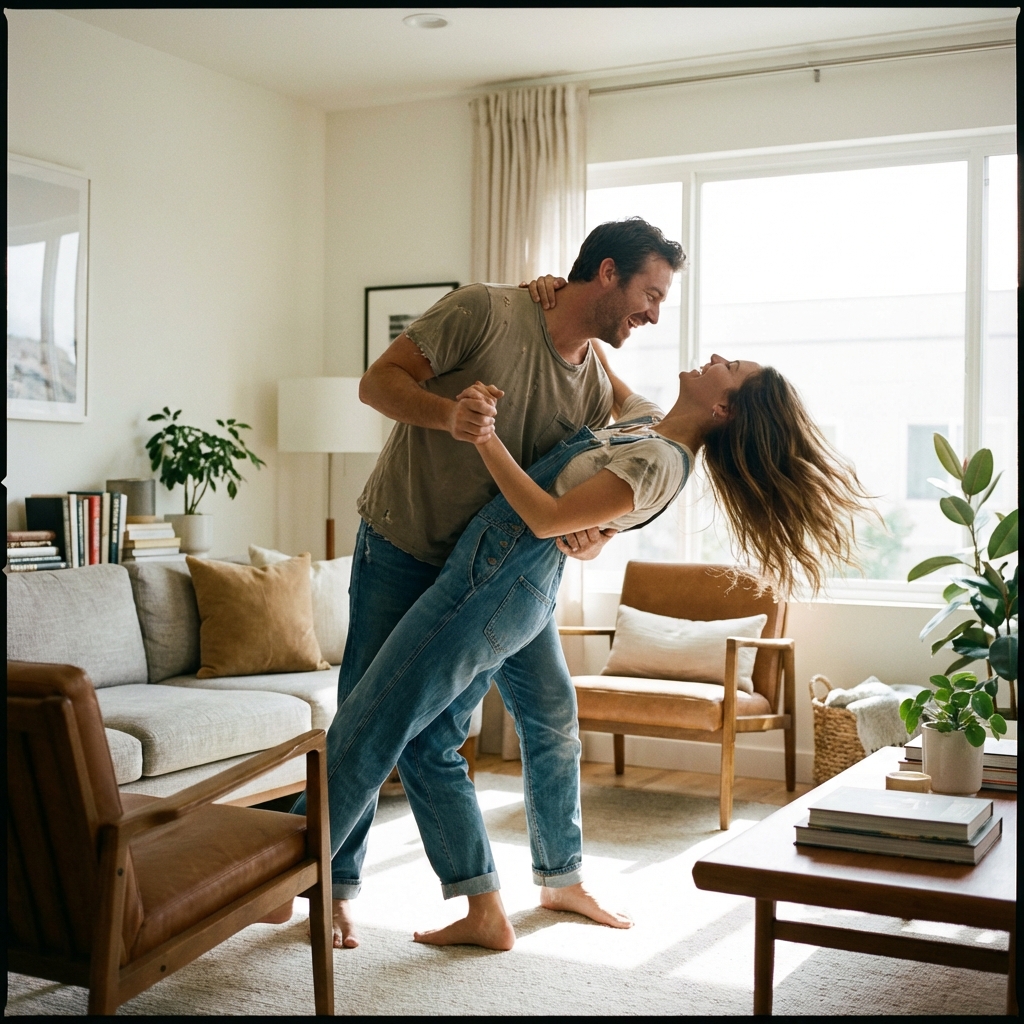
You don't need a dance studio. You need a small clear area and some basic conditions:
- Clear a 6×6 foot space minimum. Push the coffee table aside, move the chairs. You need enough room to take a few steps in each direction without colliding with furniture. A 6×6 area is tight but workable for basics; 8×8 is comfortable.
- Choose the right floor. Wood or tile floors work best. They allow your feet to slide naturally. Thick carpet creates too much resistance, which strains your knees and teaches bad habits. If carpet is your only option, wear socks to reduce friction.
- Remove hazards. This sounds obvious, but sharp table corners, low-hanging light fixtures, and children's toys are real risks when you're focused on your steps and not watching where you're going.
- Set the mood. Good lighting (not harsh overhead fluorescents), your practice playlist queued up, water bottles ready. Treating practice like a mini-date night makes it something you look forward to, not a chore.
How to practice effectively
The way you practice matters more than how long you practice. Here's the approach I recommend to all my students:
Always use music. Practice to the actual songs you dance to in class, not silence or counting. Your body needs to learn to respond to music, not to numbers. If you don't have a playlist, ask your instructor for recommendations.
Start slower than class tempo. Begin at half speed to ensure your technique is clean, then gradually work up to full tempo. Speed hiding sloppy technique is the fastest way to develop bad habits.
Drill the basics first. Every practice session should start with 3–5 minutes of your basic step. Even advanced dancers do this. The basic is the foundation everything else is built on, if it's shaky, everything collapses.
Record yourselves. Set your phone on a shelf and film a full song. You'll be amazed at what video reveals that you can't feel while dancing, collapsed posture, wandering eyes, timing drift. Watch it together without judgment and pick one thing to improve.
Stay positive. This is the most important rule. Couples practice goes wrong when one partner starts coaching, correcting, or criticizing the other. Your instructor's job is to teach. Your job at home is to practise what you already know in a supportive, fun atmosphere.
A simple 15-minute practice session
Here's a ready-to-use template:
- Warm-up (2 min): Put on music and do your basic step together. No talking, just dancing.
- Review (5 min): Practice the specific pattern or technique from your last lesson. Do it quietly at first, then with music.
- Full songs (5 min): Dance 2–3 full songs using everything you know. Don't stop for mistakes, just keep going, like a real social dance.
- Cool-down (3 min): Dance one slow song together. Focus on connection, not technique. End on a positive note.
The first rule
Practice is meant to reinforce, not learn. Don't try to teach each other new moves or figure out steps you haven't been taught yet. That's a recipe for frustration and arguments. Home practice is for polishing what your instructor has already shown you. Save the new material for lessons.
If you find yourselves disagreeing about how a step goes, just mark it and ask your instructor at the next session. No step is worth a fight. If one of you is away, see how to practice dance at home on your own, and read what to expect from private lessons if you want help with a step you keep disagreeing about. For a date-night version, see Valentine's Day dance lessons for couples.
Learn more moves to practice
Call for a free 15-minute chat. Tell us your goals and we will point you to the right class.
Alina Litvak, Founder of Quartier Latin Dance Studio
Two-time Canadian Vice-Champion • 19 Years Teaching Experience