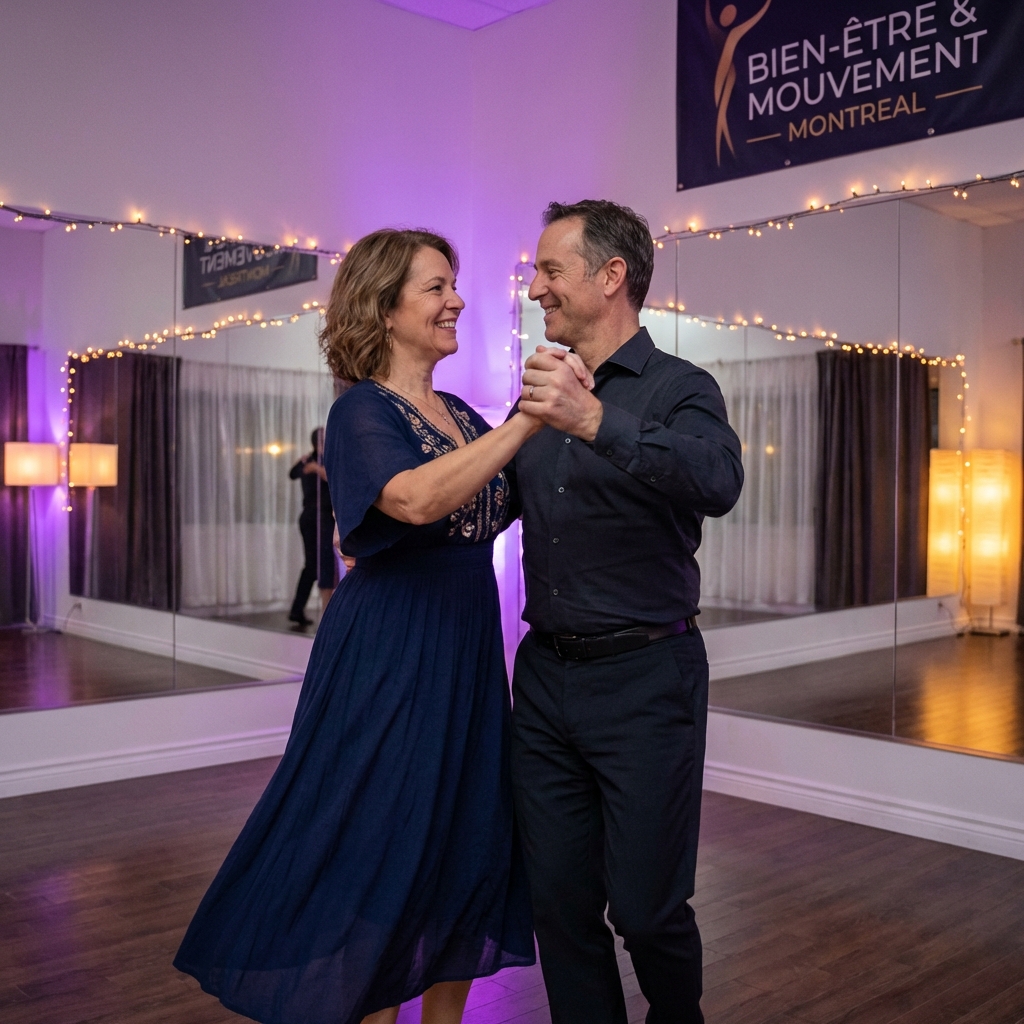
Beyond fitness: the cognitive and emotional benefits of social dance classes
Yes, dancing burns calories. Yes, it improves your cardiovascular health. But if fitness were the only benefit, you'd be on a treadmill. It's more efficient for pure calorie burn.
The real magic of social dance classes happens between your ears. After 19 years of teaching, we know dance does more than burn calories.
The brain science: why dance is unique
Why dancing beats other exercise
The key is what neuroscientists call "cognitive complexity." Running requires physical effort but low mental engagement. Dance requires:
- Split-second decision making
- Spatial awareness and navigation
- Pattern recognition and memory
- Interpreting non-verbal signals from a partner
- Synchronizing movement to music
- Adapting in real-time to unpredictable situations
Your brain is constantly building new neural pathways. This is calledneuroplasticity, and dancing is one of the most powerful triggers we know.
Mental health benefits
The antidepressant effect
Dance is linked to lower symptoms of depression and anxiety. Physical movement, music, social connection, and focused attention work together, and the result is a natural high.
Many of my students describe their weekly dance class as their "therapy." One hour where they're completely present, no ruminating about work, no scrolling through bad news. Just movement and music.
Stress relief that actually works
Unlike passive relaxation (watching TV, drinking wine), dance provides active stress relief. Your body processes stress hormones through movement while your mind gets a break from worry loops.
The effect compounds over time. Regular dancers report lower baseline stress levels, not just post-class relief.
Confidence that transfers
Learning to move confidently, especially in front of others, changes how you carry yourself everywhere. Students regularly tell me they feel more confident in meetings, presentations, and social situations after months of dance training.
This isn't mysterious. You've literally practiced being comfortable while people watch you. That skill transfers.
The social connection factor
Combating the loneliness epidemic
Adults in 2026 are lonelier than ever. Remote work, social media, and busy schedules mean fewer genuine human connections. The health risks of chronic loneliness are comparable to smoking 15 cigarettes a day.
Dance class is an antidote. You're physically present with other humans. You're touching, making eye contact, laughing together at shared mistakes. These are the building blocks of real connection.
Relationships form naturally
The rotation system in adult group lessons means you interact with everyone. Over weeks and months, acquaintances become friends. Some become romantic partners. The dance floor is one of the last organic meeting spaces.
Community belonging
Regular dancers develop a sense of belonging to their dance community. You see familiar faces, share inside jokes, support each other's progress. This belonging contributes to mental health and life satisfaction.
Emotional intelligence development
Reading non-verbal cues
Partner dancing is a constant exercise in non-verbal communication. Leaders learn to give clear signals. Followers learn to interpret subtle cues. Both develop sensitivity to body language that transfers to everyday interactions.
Patience and adaptability
Dancing with different partners teaches you to adapt instantly. Some partners are faster learners. Some need more patience. You learn to meet people where they are, a skill useful far beyond the dance floor.
Being present
You can't dance while mentally elsewhere. The present-moment awareness required for dancing is essentially moving meditation. Over time, this trains your brain to be more present in other contexts too.
Age is not a barrier
The cognitive benefits of dance are particularly important as we age, but they're not limited to older adults. Dancers of all ages show:
- Improved memory and recall
- Better balance and coordination
- Better creativity and problem-solving
- Stronger executive function
- Greater mental flexibility
Whether you're 25 or 65, your brain benefits from the complexity dance requires.
The compound effect
These benefits don't operate in isolation. They compound:
Better cognitive function builds confidence, confidence builds social connection, and social connection lifts mental health. A better mood keeps you dancing, and that brings more cognitive benefits.
Students who stick with dancing for years often describe it as transformational, not because any single class changed them, but because the cumulative effect reshaped their life.
Starting your journey
You don't need to be coordinated to start. You don't need a partner. You don't need to be young, fit, or talented.
You just need to show up and be willing to learn. The brain benefits begin immediately. The emotional benefits follow within weeks. The social benefits grow over months.
If you want to accelerate your progress, private lessons can give you a strong foundation before joining group classes.
Ready to train your brain?
Call for a free 15-minute chat and find the group class that fits. Available in French, English, and Russian.