Social dancing vs. choreography: which is right for you?
One is a conversation. The other is a speech. Both are valuable, and the choice is simple.
Quick answer
Social dancing vs. choreography, what's the difference? Social dancing is improvised partner dance based on lead-follow communication. Choreography is a pre-planned sequence of movements. Social dancing is ideal for ongoing enjoyment, social connection, and versatility. Choreography is perfect for specific events (weddings, performances) where you want a polished, rehearsed result.
"Will I learn a routine?" It is a fair first question, and the answer depends on a distinction most beginners haven't met yet: social dancing versus choreography.
What is social dancing?
Social dancing is improvised partner dancing. There's no predetermined sequence, the leader decides in real-time which moves to use, based on the music, the energy of the moment, and the follower's responses. The follower interprets the leader's physical signals and adds their own expression, styling, and musicality.
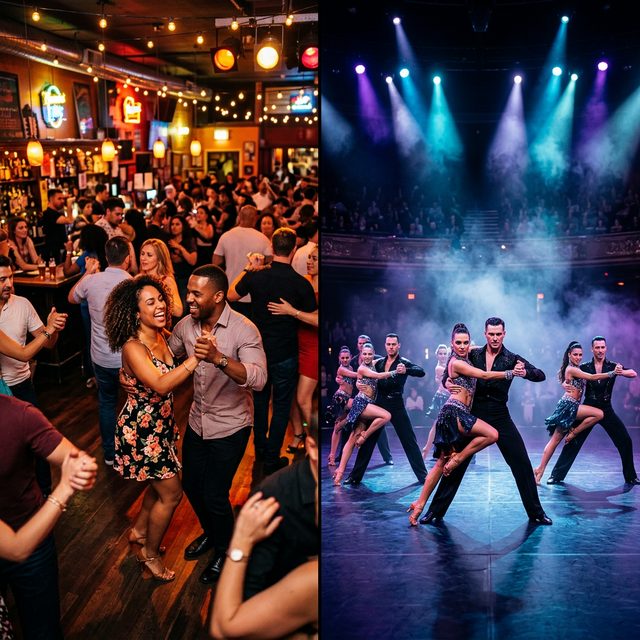
Think of it as a conversation. You don't script a conversation with a friend. You respond to what they say, build on their ideas, and let the discussion flow naturally. Social dancing works the same way. Each dance is unique, unrepeatable, and created collaboratively between two people in the moment.
Examples of social dance styles: Salsa, bachata, tango, swing, cha cha, merengue, zouk, kizomba, hustle.
What is choreography?
Choreography is a fixed, pre-planned sequence of movements designed for a specific piece of music. Both partners know exactly what comes next. There's no improvisation, no lead-follow communication, just execution of a rehearsed routine.
Think of it as a speech. You've written it, rehearsed it, and you deliver it exactly as planned. The result can be polished, dramatic, and beautiful, but it's the same every time.
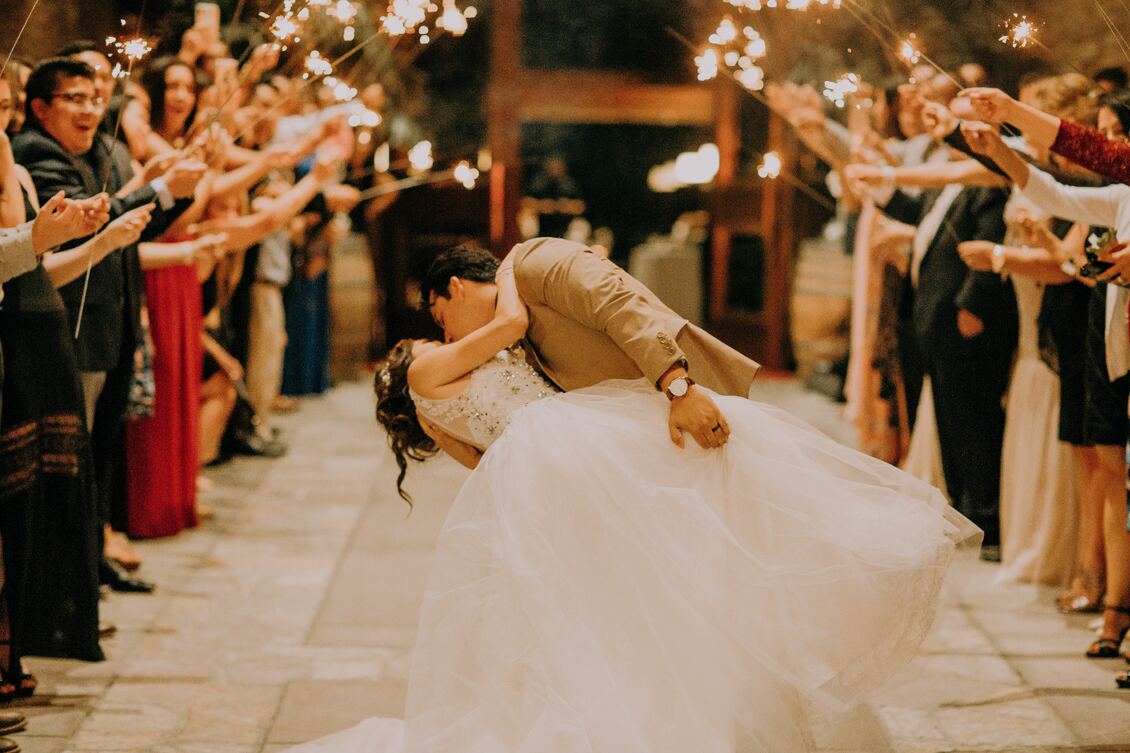
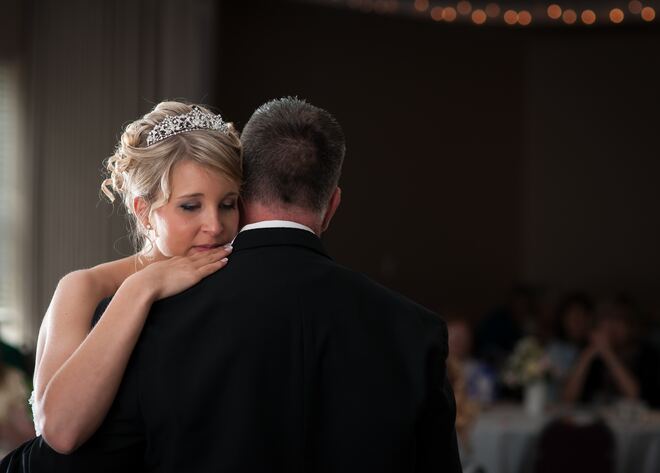
Where you see choreography: Wedding first dances, competition routines, music videos, flash mobs, dance recitals, theatre productions.
The pros and cons of each
Social dancing: pros
- Infinite variety. You never dance the same dance twice. Every partner, every song, every mood creates a different experience.
- Universal applicability. If you can social dance, you can dance anywhere, weddings, parties, festivals, bars, vacations. You don't need a specific partner or a specific song.
- Social connection. You can dance with anyone who knows the same style. Social dancing is how you meet people, build community, and make friends.
- Continuous growth. There's no "I finished learning the routine" endpoint. Social dancing evolves with you forever.
Social dancing: cons
- Unpredictable. Since it's improvised, the quality depends on your partner, the music, and your own state of mind on any given night.
- Harder to "show off." Social dancing looks less dramatic than a polished routine to the untrained eye.
- Requires adaptability. You need to be comfortable with ambiguity and spontaneous decision-making.
Choreography: pros
- Polished result. A rehearsed routine is built for visual impact.
- Predictable. You know exactly what's going to happen, which reduces anxiety for nervous performers.
- Event-ready. For weddings, showcases, or performances, choreography delivers a reliable, camera-ready result.
- Faster to look "good." You can learn one routine without learning a whole dance.
Choreography: cons
- Limited to one song. The routine only works with the specific song it was choreographed to.
- Requires a specific partner. Your choreography partner is the only person you can perform it with.
- Fewer transferable skills. Learning a wedding routine doesn't teach you to dance at the reception party afterward.
- One-time use. After the event, the routine often has no further application.
My recommendation: both, social first
Build social dancing first. Social dance skills carry over, work anywhere and keep growing. They make you a better dancer in every context, including when you need choreography.
A dancer with social skills already understands timing, movement and partner connection, so a routine comes together faster. Someone who only knows choreography starts from scratch for every new routine and has nothing to use on a social dance floor.
The ideal approach for most people: build your social dance skills as an ongoing practice, and add choreography when needed for specific events (weddings, performances, showcases). You get the versatility of social dancing and the polish of choreography.
Which should you start with?
- Start with social dancing if: You want a long-term skill, you're interested in the social aspect of dance, you enjoy spontaneity, or you want to be able to dance at any event.
- Start with choreography if: You have a specific event coming up (wedding, performance), you prefer structure and predictability, or you're not ready for open-ended learning.
- Start with both if: You're preparing for a wedding but also want to dance socially at the reception.
Find your dance path
Social dance skills, a wedding routine, or both: tell us your goal on a free 15-minute call.
Alina Litvak, Founder of Quartier Latin Dance Studio
Two-time Canadian Vice-Champion • 19 Years Teaching Experience
- Tags:
- Guide
- Social Dance