Dance floor etiquette every beginner needs to know
The unwritten rules that nobody tells you, until they do.
Quick answer
What are the basic rules of dance floor etiquette? Practice good hygiene, be gentle with your partner, apologize for mistakes and move on, don't teach on the social floor, respect personal boundaries, thank your partner after each dance, and dance with a variety of people. These simple courtesies make the dance floor enjoyable for everyone.
Every dance community runs on a set of unwritten rules that experienced dancers take for granted but beginners often don't know exist. At Quartier Latin Dance Studio in Montreal, I've spent 19 years teaching dance technique and dance culture, the social norms that make the dance floor a welcoming, respectful, and joyful place for everyone.
Here are the etiquette essentials that every new dancer should know before stepping onto the social floor.
The non-negotiables
Hygiene: the golden rule
This is number one for a reason. Partner dancing is intimate. You'll be in close physical contact with another person for 3–5 minutes at a time. The absolute minimum standard:
- Shower before attending a social dance event
- Wear clean clothes and deodorant
- Bring breath mints (not gum, gum while dancing is a hazard)
- Bring a small towel if you tend to sweat (many dancers do, it's normal)
- Consider bringing a fresh shirt for longer events
Nobody will tell you to your face if your hygiene needs attention, they'll simply stop accepting your dance invitations. Don't let this be the reason you can't find partners.
Be gentle
This applies to both leaders and followers. Leaders: never force a move. If your partner doesn't respond to a lead, it means the signal wasn't clear enough, not that you should push harder. Over-leading is the most common beginner mistake I see, and it can cause genuine discomfort or injury. A light, clear lead is always better than a forceful one.
Followers: maintain your own balance and frame. Don't hang on your partner or grip their hand tightly. A gentle, responsive connection communicates more effectively than a death grip.
Personal boundaries
Dance involves physical contact by nature, but boundaries must be respected absolutely. If a partner holds you too close for comfort, you have every right to adjust the distance. If someone's hands go somewhere inappropriate, you can and should stop the dance. These boundaries are universal and non-negotiable in every reputable dance community, including ours at Quartier Latin.
The social courtesies
Ask, don't assume
Always ask someone to dance verbally or with a clear gesture (eye contact and extended hand). Never grab someone's hand and pull them onto the floor without asking. The ask-and-accept process is a micro-contract of consent, and respecting it shows that you value your partner as a person, not just a body to dance with.
Accept "no" graciously
If someone declines your invitation, smile, say "no problem," and move on. Don't ask why, don't look hurt, and don't avoid them for the rest of the evening. A "no" is usually about the other person (they're tired, they need water, they're saving a dance) and almost never about you.
Don't teach on the dance floor
This is one of the most common etiquette violations, and it's usually well-intentioned. Resist the urge to correct your partner's technique during a social dance. Unless they specifically ask for feedback, unsolicited teaching is perceived as condescending and ruins the enjoyment of the dance. Save the instruction for class, on the social floor, just dance together and have fun. Our guide to etiquette in group class and on the social floor explains how the two settings differ.
Dance with variety
Don't only dance with the best dancers in the room. Don't only dance with people you know. The dance community thrives when experienced dancers are generous with beginners, and when everyone is open to dancing with different people. Some of my most memorable dances in 19 years have been with complete beginners whose joy and enthusiasm more than compensated for their limited technique.
Thank your partner
After every dance, thank your partner. "Thank you, that was fun" is the universal close. Walk them back to where they were sitting or standing, a small gesture that's appreciated. If you particularly enjoyed the dance, say so specifically: "Your timing was great" or "I loved your styling."
Floor craft: spatial awareness
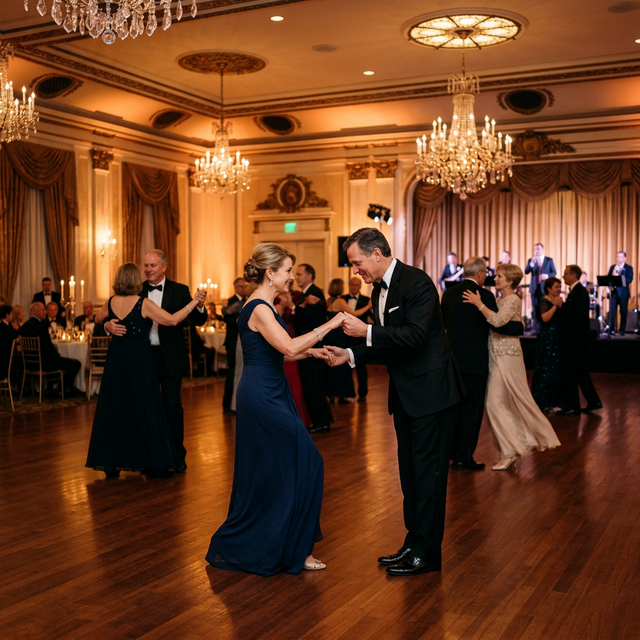
- Traveling dances (waltz, foxtrot, tango) move counter-clockwise around the floor. Stay in the flow of traffic.
- Spot dances (salsa, bachata, cha cha) stay in one area. Don't drift into other couples' space.
- Be aware of your surroundings. Before executing a big move, check that you have space. Collisions happen, but the best dancers are the ones who minimize them through awareness.
- If you collide: apologize, smile, and move on. It happens to everyone, including professionals. A quick "sorry!" and you're done.
The mistake everyone makes (and how to handle it)
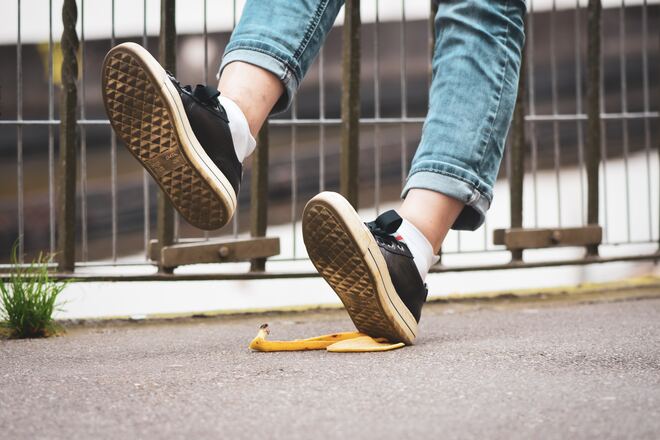
You will step on someone's foot. You will forget a step mid-pattern. You will turn the wrong direction. Every dancer who has ever lived has made these mistakes, and the correct response is always the same: smile, say a quick "oops" or "sorry," and keep dancing. The worst thing you can do is stop, apologize profusely, and make the mistake into a much bigger deal than it is. In the flow of a social dance, small mistakes are invisible. Making a scene about them is what people actually notice.
Learn the dance and the culture
At Quartier Latin, we teach more than steps. We welcome you into a community built on respect, joy, and connection.
Alina Litvak, Founder of Quartier Latin Dance Studio
Two-time Canadian Vice-Champion • 19 Years Teaching Experience