How to ask someone to dance (without the awkwardness)
It's three words, a smile, and less scary than you think.
Quick answer
How do you ask someone to dance? Walk up, make eye contact, smile, and say "Would you like to dance?" That's all it takes. At social dance events, asking and being asked is expected and welcomed. It's not a romantic proposition, it's a friendly invitation. And saying "no thank you" is equally normal and never taken personally.
Of all the skills I teach at Quartier Latin Dance Studio in Montreal, this might be the most underrated: the art of the ask. Not the cross-body lead, not the spin technique, not the hip movement: the simple act of walking up to another human being and saying, "Would you like to dance?"
For experienced social dancers, this is as routine as ordering coffee. But for beginners, it can feel like the most terrifying thing in the world. I get it. Anxiety, avoidance and creative excuse-making are all part of it. On the other side is the relief, and the "why was I so scared?" smile that comes after the first successful ask.
Why it feels so scary (and why it shouldn't)
The fear of asking someone to dance comes from a fundamental misunderstanding: most beginners treat the ask like a romantic proposition. It's not. In the social dance world, asking someone to dance is more like asking a colleague if they'd like to grab lunch. It's casual, expected, and carries zero romantic implication unless you want it to.
At any social dance event in Montreal (whether it's a salsa night in the Plateau, a bachata social downtown, or a milonga in Mile End) people are there specifically to dance with other people. You're not interrupting anyone. You're not being presumptuous. You're participating in the entire reason everyone showed up.
The perfect ask: a step-by-step guide
1. Approach with confidence (or fake it)
Walk toward the person you'd like to dance with. Don't hover nearby hoping they'll notice you. That's more awkward than the direct approach. Move with purpose. If your heart is pounding, that's normal. Your body will look calmer than your brain feels.
2. Make eye contact and smile
Before you say anything, make eye contact. A genuine smile communicates warmth and puts the other person at ease. In many dance communities, eye contact alone is an invitation: in Argentine tango, the traditional "cabeceo" (nod) is how partners are chosen from across the room without ever saying a word.
3. Use simple words
You don't need a speech. "Would you like to dance?" works perfectly. "Shall we dance?" is equally effective. In Montreal's bilingual dance scene, "On danse?" is beautifully direct. The simpler, the better. No one is judging your vocabulary. They're just looking for a dance partner.
4. Extend your hand
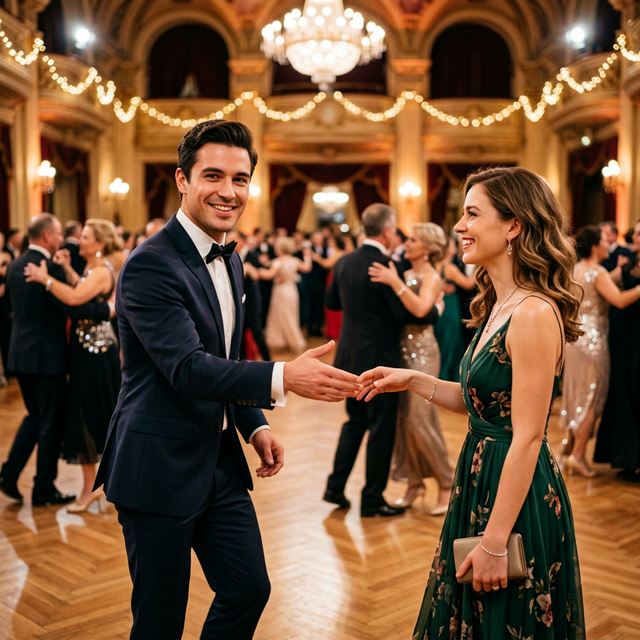
Offer your hand palm-up as you ask. This small physical gesture makes the invitation concrete and gives the other person a natural way to accept: simply placing their hand in yours. It's elegant, traditional, and takes the ambiguity out of the moment.
5. Accept the answer (either one)
If they say yes: great, lead or follow them to the dance floor. If they say no: smile, say "no problem," and ask someone else. A "no" at a social dance event is never personal. The person might be tired, saving a dance for someone specific, nursing a sore foot, or simply taking a break. It says nothing about you.
What nobody tells you about being asked
Here's the other side of the equation that beginners rarely consider: being asked to dance feels wonderful. When someone walks up to you (especially someone you don't know) and says "would you like to dance?", it's a compliment. It means they want to share three minutes of their evening with you.
This is why the dance community culture around asking is so important to preserve. Every time you ask someone to dance, you're making their night a little better. Every time you accept an invitation graciously, you're encouraging someone to keep asking. The whole ecosystem runs on mutual generosity. For the rest of the basics, see our guide to dance floor etiquette every beginner needs.
The unwritten rules of social dance etiquette
- Ask a variety of people. Don't just ask the best dancers in the room. Dance with beginners, intermediates, and advanced dancers. This is how the community stays welcoming and grows.
- Don't monopolize one person. It's fine to dance with the same person twice in an evening, but asking them for every song is generally frowned upon unless you came together.
- Thank your partner after every dance. A simple "thank you, that was fun" goes a long way. Specific compliments ("your timing was great" or "I loved that turn") are even better.
- Respect the "no." If someone declines, never pressure them or ask why. Just move on with a smile.
- Everyone can ask anyone. Regardless of gender, experience level, or age. Anyone can ask anyone. The old "men ask, women wait" tradition is fading in most dance communities, and good riddance.
Your first social dance night
If you're preparing for your first social dance in Montreal, here's my advice from 19 years of watching beginners navigate this milestone: set a goal of asking three people to dance. That's it. Three dances. The first will feel terrifying. The second will feel easier. The third will feel fun. And by the fourth (which you won't be able to resist) you'll wonder why you ever hesitated.
At Quartier Latin Dance Studio, we regularly organize social dance events built to welcome newcomers. The atmosphere is warm, the music is fantastic, and the regulars go out of their way to dance with beginners. It's the safest possible environment to practice your first ask.
Ready for your first dance?
Learn the skills and confidence you need in our beginner classes, so when you hit the social dance floor, you'll know exactly what to do.
Alina Litvak, Founder of Quartier Latin Dance Studio
Two-time Canadian Champion • 19 Years Teaching Experience