Traditional vs. choreographed wedding dance: a quiet moment or a show?
Picture it: the floor clears, every phone goes up, and it's just the two of you. Some couples want that moment small and close. Some want to give the room a show. Either works, as long as you both know exactly what comes next.
Quick answer
Should our first dance be traditional or choreographed? Choose traditional (a slow dance, rumba, bachata or waltz) if you want a romantic moment with less practice. Choose choreographed (a planned routine with dips, turns or a song switch) if you want a show and can practise most weeks. Torn between them? Do both: a slow start, then one surprise.
One thing is the same either way. With our wedding dance lessons in Montreal, every first dance is set to your song, step by step, so even the simplest sway has a plan. The real choice is how much of a show you want to put on.
The difference at a glance
| Traditional | Choreographed | |
|---|---|---|
| What guests see | The two of you, close, moving together to your song | A planned routine with dips, turns and maybe a lift, built to get a reaction |
| Usual styles | Slow dance, rumba, bachata, waltz or foxtrot | Salsa, cha cha, a mix of styles, or a slow start with a song switch |
| Practice at home | A few run-throughs before each lesson | Most weeks, both of you, for the whole run-up |
| Lifts and tricks | Usually none; a dip at the end if you like | Possible; for lifts, Classic or Showstopper (15+ lessons) |
| If you lose your place | Easy to hide: you keep swaying and pick it up on the next phrase | More visible, so the routine is drilled until it runs on its own |
| Package that fits | Essential (8 lessons), made for a simple first dance | Classic (15) for dips and turns, Showstopper (20+) for a full show |
Traditional: a moment for the two of you
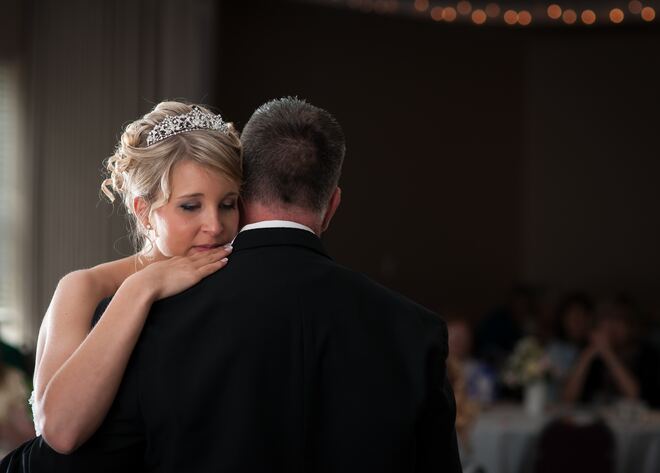
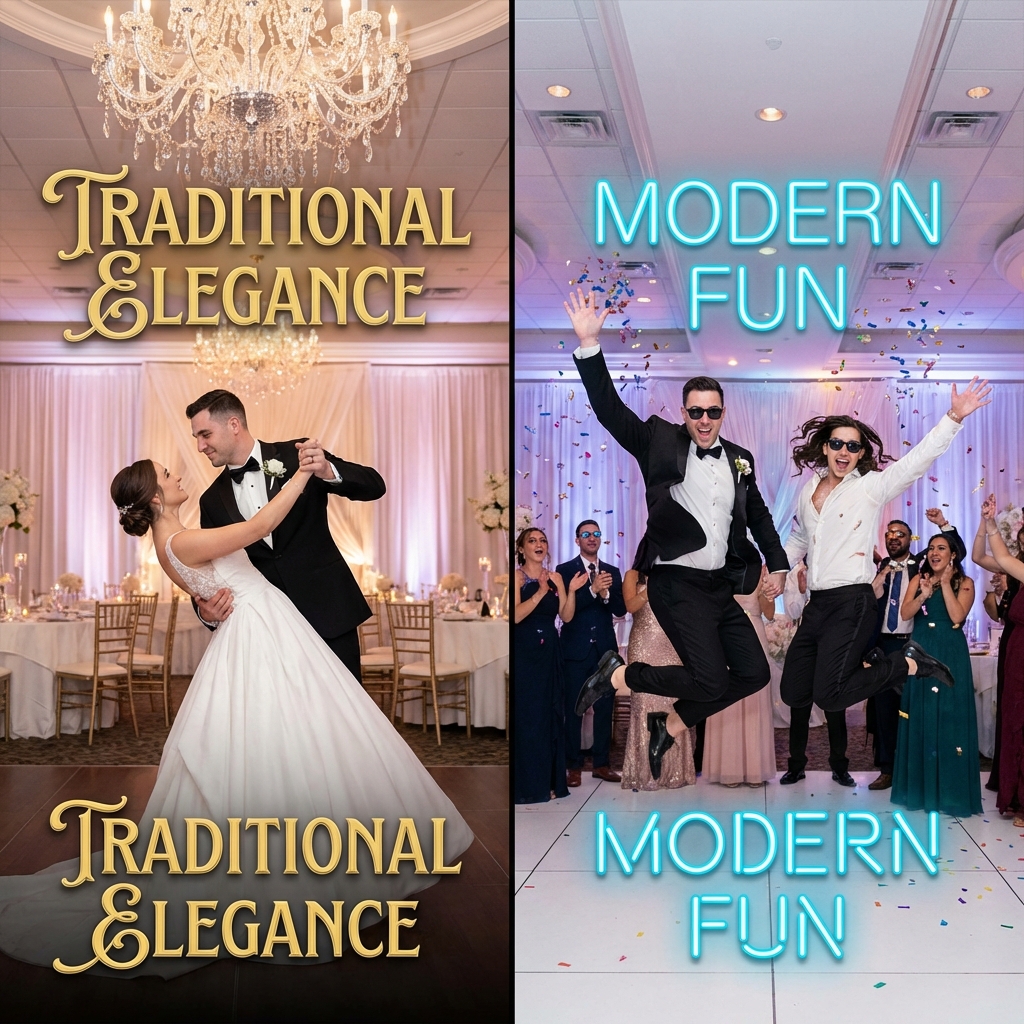
A traditional first dance is built on ballroom and partner basics: a slow dance, a gentle rumba or bachata, a waltz or foxtrot. Think good posture, a soft hold, a few turns and a lot of looking at each other. It's Grace Kelly, not a viral video.
It suits you if:
- You want romance more than entertainment
- One or both of you would rather not be the centre of attention
- The wedding is close and lessons have to fit a short run-up
- Grandparents and parents are the audience you most want to move
What you gain: less to remember, less pressure, and a dance that won't look dated in photos 30 years from now. A small slip disappears into the sway.
What you give up: the wow. If you're both natural performers, it can feel like you held back.
Choreographed: a show for your guests
A choreographed first dance is a routine with a shape: an opening, a build, and a big moment. It can include dips, spins, a lift, a style change or a song switch, and its job is to surprise people.
It suits you if:
- You both like being watched, or at least don't mind it
- You want a moment people talk about at the reception
- You can practise at home most weeks, together
- You want a dance that tells your story, from your song to your style
What you gain: a real wow moment, a great wedding video, and the fun of building something together.
What you give up: time. There's more to learn and more to drill, and if only one of you is excited about it, the room will see that too.
Which Latin styles work for each? See why Montreal couples choose Latin dance for their weddings, and every wedding dance style ranked by difficulty.
The hybrid: start slow, then surprise them
You don't have to pick. Open with 60 to 90 seconds of slow, close dancing, then switch the music or break into a short routine. You get the romance first and the wow second, and you don't have to hold show energy for a whole song.
The surprise only works if the slow part looks real, so keep it simple and sincere. Our guide to surprising your guests with your first dance covers the song switch, the DJ and keeping the secret.
Five questions that decide it
Answer each one with A or B, separately, then compare.
- At karaoke night, you: (A) watch from the back, (B) grab the mic first.
- When you imagine the first dance: (A) close and quiet, (B) guests cheering and filming.
- The rest of the wedding is: (A) elegant and classic, (B) fun and unexpected.
- Practice at home most weeks: (A) honestly, no, (B) yes, we'll make time.
- Months until the wedding: (A) two or three, (B) four or more.
Mostly A: traditional. Mostly B: choreographed. A mix, or you two disagree: the hybrid. And if question 4 or 5 came out A, give those two answers the most weight. Time and nerves are harder to change than taste.
When one of you wants a show and the other doesn't
Build the dance so the quieter partner never has to perform alone:
- Give the show to the keen one. A short solo moment or a styling flourish while the other partner simply holds the frame.
- Keep the hard parts shared. Turns and dips the leader controls, so the nervous partner follows rather than remembers.
- Put the routine after the slow part. By the time the music changes, the first minute is already behind you.
If the nerves are the real issue, read how to calm first dance jitters before you decide anything.
Your dress, shoes and floor count too
Whatever you choose, it has to work in what you'll be wearing and where you'll be dancing:
- A long train or a full skirt limits fast spins and lifts. A bustle, or a slow traditional dance, avoids the problem.
- Heels change your balance. Practise in the real shoes, or a pair with the same heel height, from the middle of your lessons on.
- A small floor, carpet or grass rules out travelling steps. Ask the venue for the floor size and surface before the routine is set.
Tell us all three early, and the dance is built around them.
Whichever you pick, you won't be guessing
Nervous is normal. We're good at that part. Alina has taught for 19 years, in English, French and Russian, and she sets the steps to your level, starting from zero if that's where you are. Traditional or choreographed, every count is planned, with tips for keeping calm when everyone is watching.
Not sure how many lessons your choice takes? Read how many wedding dance lessons you need, or call 514-966-3736 with your song and your date, and we'll tell you which approach fits.
Questions about traditional and choreographed first dances
Is a choreographed dance harder to remember when we're nervous?
Only if it's under-rehearsed. Drill it until your feet know it, and nerves have nothing to grab.
Can we start traditional and add a routine later?
Yes. A slow dance is the first half of a hybrid anyway, so the lessons you've had aren't lost. Decide before the last few weeks, so the new part has time to settle.
Is a waltz the only traditional option?
No. A slow rumba, a bachata or a simple sway with a few turns all read as classic and romantic. Pick the style that fits your song, not the other way around.
Is choreography the same as social dancing?
No. A routine is set to one song and one partner; social dancing is improvised. Here is social dancing versus choreography in detail, if you'd like to keep dancing after the wedding.
Quiet moment or full show, built on your song
Free 15-minute call: tell us your song, your date and how you picture it. We'll suggest traditional, choreographed or a mix.
Alina Litvak, Founder of Quartier Latin Dance Studio
Two-time Canadian Vice-Champion • 19 Years Teaching Experience