Kids Dance Classes in Montreal: What to Expect
Everything parents need to know before enrolling their child in dance classes.
Quick answer
What should parents expect from kids dance classes? A short, structured class built around games and music: a warm-up, a few new steps, a little routine and a cool-down. Expect your child to be a bit unsure in the first class or two and to settle in over the first few weeks. Before you enroll, ask how children are grouped by age and level, and how teachers help shy kids join in.
Will my child like it? Will they freeze, cry at the door, or refuse to join in? Almost every parent who calls us has some version of that worry, and it's a fair one: you're handing your child to a room full of strangers and hoping it goes well. After 19 years of teaching in Montreal, I can tell you that a little hesitation is normal and usually passes quickly. Here's what really happens, from the first class to the first few months, so you and your child walk in knowing what to expect.
Your child's first class, step by step
- Before you leave home: Tell your child what will happen in simple words: "There will be music, a teacher, other kids, and you'll learn a little dance." Children handle new places much better when nothing is a surprise.
- Arriving: Aim to arrive a few minutes early so your child can see the room, use the washroom and meet the teacher before the music starts. Rushing in late is the hardest way to begin.
- The first few minutes: Some children run straight in. Others hold a parent's hand and watch. Both are fine. A good teacher will invite, not force, and most watchers join in once they see the other kids having fun.
- During class: Your child will copy the teacher, play movement games and try a few steps. They won't get everything right, and they're not supposed to. The goal of a first class is for your child to leave wanting to come back.
- Afterwards: Ask "What was the most fun part?" rather than "Did you do well?" It keeps the focus on enjoyment, and you'll often get a demonstration in the kitchen that evening.
What happens in a typical class?
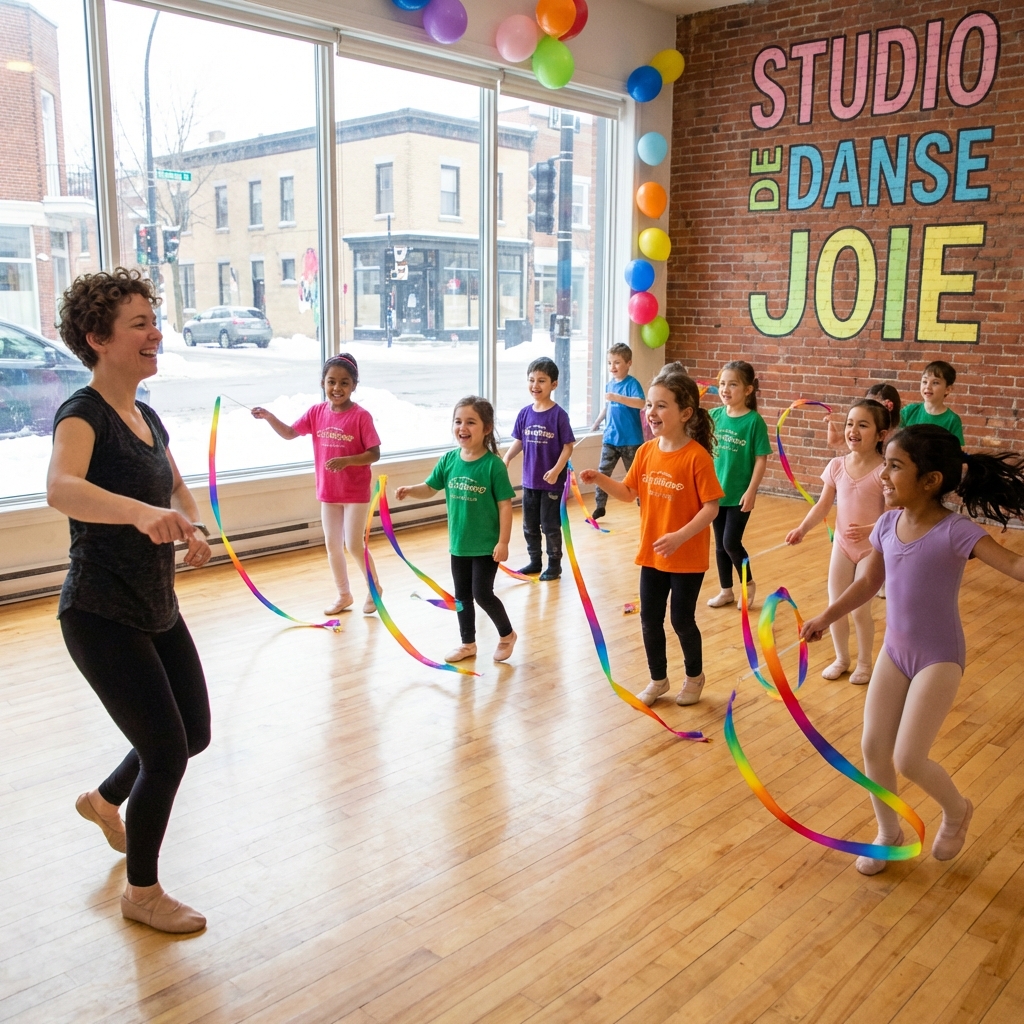
A well-structured kids dance class follows a predictable pattern that helps children feel safe and oriented:
- Warm-up (5–10 min): Fun exercises and movement games that get bodies moving safely. For younger children, this might involve animal walks, freeze dance, or follow-the-leader.
- Technique (10–15 min): Age-appropriate dance fundamentals taught through demonstration and practice. This is where children learn specific steps and body positions.
- Choreography (15–20 min): Learning simple, engaging routines that build on the technique learned. Children love having a "dance" they can show parents.
- Games (5–10 min): Dance-based games that reinforce skills without feeling like drills. Musical statues, follow-the-leader, and partner challenges are favourites.
- Cool-down (5 min): Gentle stretching and a group moment to celebrate what was achieved.
When should kids start?
Children as young as 3–4 can begin with creative movement classes, where the focus is on rhythm, coordination, and having fun with music. By age 5–6, they're ready for more structured dance instruction with actual techniques and choreography. Children aged 7 and up can begin learning specific styles like Latin or ballroom. Our own kids program starts at age 4 and groups children by age and experience, so a beginner isn't placed with kids who have danced for years.
The most important factor is the child's interest, not their age. If your child loves to move and groove to music at home, they're ready. For a closer look at readiness signs by age, see our guide on when your child should start dance lessons.
The first month: what progress really looks like
Parents sometimes expect a polished routine after a few classes. Real progress in the first weeks is quieter, and easier to miss if you don't know what to look for:
- Weeks 1–2: Your child learns the routine of class: where to stand, how to follow the teacher, when to listen and when to move. Being comfortable in the room is the win here.
- Weeks 3–4: They start to remember steps from one class to the next and may hum the music at home. Clapping or stepping on the beat begins to come more naturally.
- After that: Short sequences start to stick, posture improves, and many children begin to show off what they learned without being asked.
Every child moves at their own pace. A quiet child who watches for two weeks and then dances with a big smile has made just as much progress as the one who jumped in on day one.
Helping a shy or nervous child
- Let them watch first: Sitting at the edge of the room for a few minutes is a normal way to warm up, not a sign the class isn't for them.
- Don't push from the sidelines: Calling out "Go on, join in!" in front of other kids usually makes a shy child freeze. Let the teacher do the inviting.
- Keep the goodbye short: A quick, cheerful "See you after class" works better than a long, worried farewell at the door.
- Give it a few classes: Judging after one session is too soon. Most hesitant children need a few classes before the room feels like theirs.
If you know your child is anxious, mention it when you call us. The teacher can plan a small role for them early in class, like helping start the music, which often breaks the ice. Grown-ups get first-class jitters too; our article on calming first-class nerves has tips you can adapt for kids.
What parents should know
- No experience needed: Dance classes for kids assume zero prior knowledge. Every child starts at the beginning.
- Comfortable clothing: Leggings or stretchy pants and a t-shirt work perfectly. Avoid jeans or restrictive clothing. Dance shoes aren't required for the first class; socks or clean indoor shoes are fine. Our what to wear to dance class guide covers the details.
- Bring water: A labelled water bottle saves a lot of mid-class trips to the fountain.
- Drop-off is okay: Many children perform better when parents aren't watching from the sidelines (it can be distracting). Try stepping out after the first few classes. You might be surprised.
- Progress takes time: Don't expect your child to be performing after one class. Like any skill, dance develops over weeks and months. Celebrate small wins along the way.
Benefits of dance for children
Dance offers a remarkable range of developmental benefits that go far beyond the physical:
- Physical development: Improves coordination, balance, flexibility, and strength. Unlike single-sport activities, dance develops the entire body symmetrically.
- Confidence building: Mastering new skills gives children tangible proof of their abilities. The "I did it!" moment after landing a tricky step is transformative.
- Social skills: Partner and group work teaches children to cooperate, take turns, and communicate non-verbally, skills that transfer directly to school and friendships.
- Discipline and creativity: Learning routines teaches focus and the value of practice, while moving to music lets children express emotions in their own way.
What to look for in a kids dance program
Not all programs are equal. When you are choosing a studio in Montreal, check these before you enroll:
- Experience with children. Teaching kids is a different skill from teaching adults. It takes patience, energy and the knack of making technical ideas feel like play.
- Age-appropriate classes. Four-year-olds need games and creative movement, not strict technique drills. Older children can handle more structure.
- A safe, clean room. Look for proper flooring (sprung or semi-sprung), good ventilation.
- Goals to work toward. Ask whether the program includes a recital or performance, so children have a moment to share what they learned.
- An encouraging atmosphere. Ask how the teacher welcomes new kids. The energy should feel supportive, not stressful.
Questions to ask before you enroll
- How are children grouped: by age, by experience, or both?
- What does a beginner learn in the first few weeks?
- Can parents watch, and is there a place to wait during class?
- Which language is the class taught in?
- What should my child wear and bring?
- What does the program cost, and what's included? Prices vary by studio, so compare what you get, not just the number.
Common questions from parents
My child cried at drop-off. Should we stop?
Not yet. Tears at the door are common in the first few classes, especially for younger children, and they often stop a minute after the music starts. Ask the teacher how your child did once you left. If they settled and joined in, keep going and keep the goodbye short.
Can siblings of different ages take the same class?
Sometimes, if they're close in age and level. A big age gap usually means one child is bored and the other is lost, so separate groups tend to work better. Tell us both ages and we'll suggest what fits.
Should my child practise at home between classes?
Not formally. Playing the class music and dancing together for a few minutes is plenty. If your child wants to show you a step, let them teach you; explaining it is one of the best ways to remember it.
Does my child need to speak French to join?
No. Kids' classes at our studio are offered in English, French and Russian, so you can choose the language your child is most comfortable in.
At Quartier Latin, our kids dance program is designed to make learning fun while building real skills. Alina teaches every class herself and is experienced in working with children of all temperaments, and she creates a positive, encouraging environment. Classes are available in English, French, and Russian. Parents may also like these tips on how to practice dancing at home as a couple.
Give your child the gift of dance
Not sure which group fits your child? Book a free phone consultation. Tell us their age, experience and personality, and we'll help you choose the right class.
Alina Litvak, Founder of Quartier Latin Dance Studio
Two-time Canadian Vice-Champion • 19 Years Teaching Experience
- Tags:
- Kids Dance
- Montreal