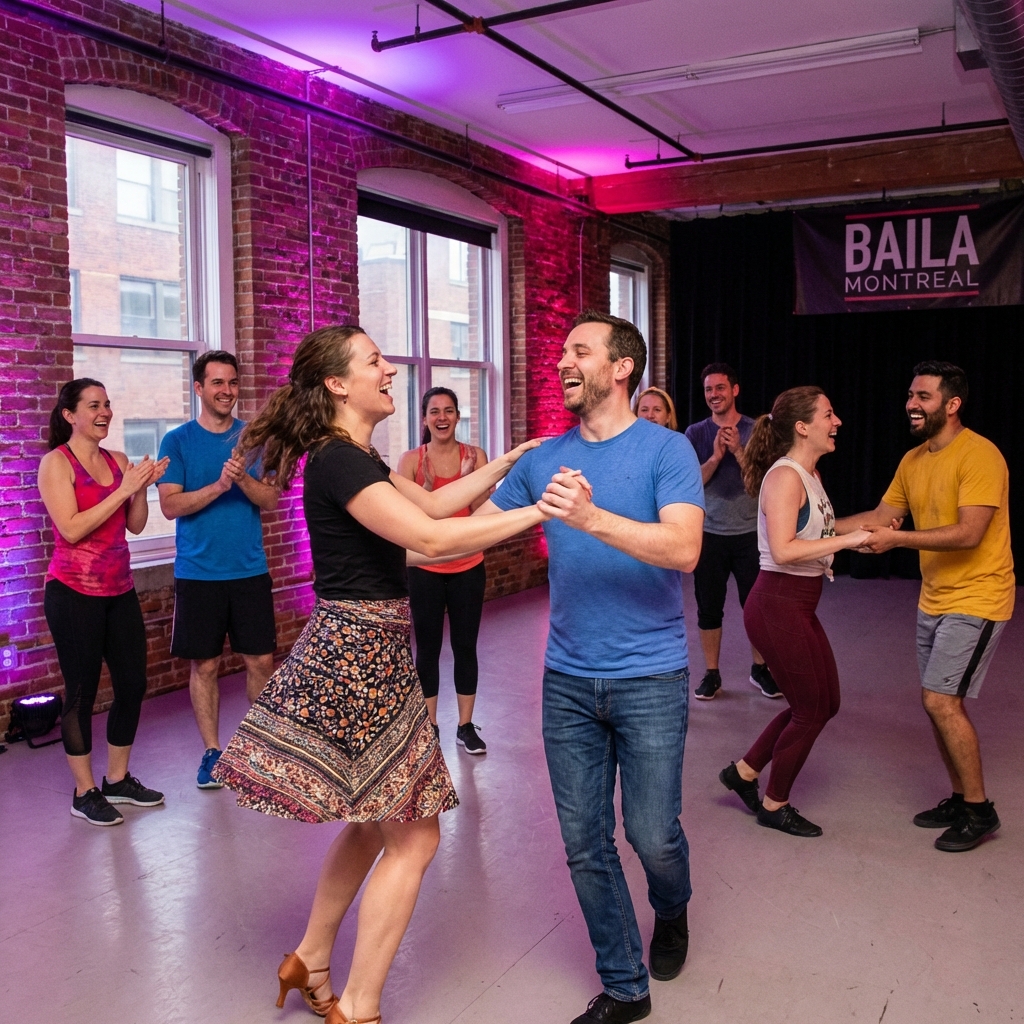
The "Addictively Fun" method: how we make technical learning feel like a party
I'll let you in on a secret: most people don't quit dance because they can't learn. They quit because learning isn't fun.
Think about it. Traditional dance instruction often feels like school, drills, corrections, repetition, critique. Necessary? Sometimes. Sustainable? Rarely. Adults have enough pressure in their lives without their hobbies feeling like homework.
That's why I developed what I call the "Addictively Fun" methodology. It's how we teach technical skills while making sure people enjoy the process.
The philosophy: learning disguised as play
Children learn fastest when they're playing. Adults are no different. We just forget this because most of our learning happens in serious contexts (work, certifications, etc.).
The core principle is simple: embed technical learning inside enjoyable experiences. When you're having fun, you:
- Stay longer in class (more practice time)
- Return week after week (consistency)
- Practice at home voluntarily (accelerated learning)
- Recruit friends to join (community growth)
- Actually remember what you learned (emotional encoding)
The four pillars of addictively fun classes
1. Music selection that moves you
This seems obvious, but plenty of classes get it wrong. They play "practice music", generic beats at consistent tempos for technical drilling.
We play music you'd actually want to hear at a party. Songs with emotion, with builds and breaks, with personality. Yes, we control the tempo for teaching purposes, but we never sacrifice musicality.
Result: You're not just practicing steps. You're dancing to songs that make you feel something.
2. Social rotation that creates connection
In our group classes, you don't dance with just one person. We rotate partners every few minutes.
This serves multiple purposes:
- You meet everyone: Every class is a social event
- You adapt constantly: Different partners teach you flexibility
- No one feels stuck: If chemistry isn't there, you'll rotate soon
- Beginners learn from intermediates: And intermediates practice leading/following with less experienced partners
The rotation creates a party atmosphere. You're not stuck in a drill. You're meeting people, laughing, adjusting, connecting.
3. Technique served in small doses
Most dance classes front-load technique: "Before we can have fun, you need to learn these 15 things correctly."
Our approach: dance first, technique as needed.
We get you moving immediately. Then we pause to make one small correction. Then back to moving. Then another small tweak. The technique arrives just when you need it, never before you're ready for it.
Think of it like playing a video game. You learn the controls by playing, not by reading a manual first.
4. Celebration of progress, not perfection
In traditional instruction, improvement is measured against an ideal. You're always falling short.
In our classes, improvement is measured against yourself. Did you do that turn better than last week? Victory. Did you finally feel the beat on the "1"? We're celebrating.
This shift matters more than any technical adjustment. Dancers who feel successful keep dancing. Dancers who feel inadequate quit.
What this looks like in practice
Here is how a group class can run with this method:
The opening
Music is already playing when you arrive, something upbeat and inviting. We start with simple movement: walking to the beat, basic weight shifts, body isolation. No pressure, no precision required. Just getting warm and connected to the music.
The core sequence
We introduce the main move or pattern of the day. We show it once with no explanation, just "watch." Then we split it into parts, do it together slowly, then with a partner, then faster.
Throughout: "Perfect is not the goal: moving is the goal."
Rotation dance
Now the fun really starts. Real music, partner rotation, incorporating what we just learned. I circulate giving individual tips, but mostly I'm letting you practice and enjoy.
This is where the learning really happens, through repetition disguised as social dancing.
The challenge
For students ready for more, we add a variation or progression. Maybe a styling element, maybe a more advanced version of the base move. Optional for everyone, push yourself or practice what you have.
The finale
We end with free dancing to a great song. No instruction, no rotation, just enjoy. Leave feeling good, not exhausted or overwhelmed.
Who this works for
The Addictively Fun approach is especially powerful for:
- Complete beginners intimidated by "serious" dance classes
- Adults returning to dance after years away
- People who've tried dance and hated it (often because of the teaching style)
- Anyone looking for social connection alongside learning
- Students who need to enjoy a process to stick with it
That said, if you want intense competitive training with technical precision as the primary focus, private lessons might be a better fit. Different goals require different approaches.
What keeps people dancing
Fun is what keeps people coming back week after week. If you are still deciding, see what you get from dance lessons, or how the same approach works for dance team building in Montreal. Planning a party? We also host private events in our studio.
That's the real measure of success: not how fast someone learns their first pattern, but whether they're still dancing a year later.
Experience it yourself
Reading about fun is not the same as feeling it. Call us for a free 15-minute consultation and we'll tell you which class fits how you like to learn.
Ready to have fun while learning?
Classes in English, French and Russian. Start with a free 15-minute call.