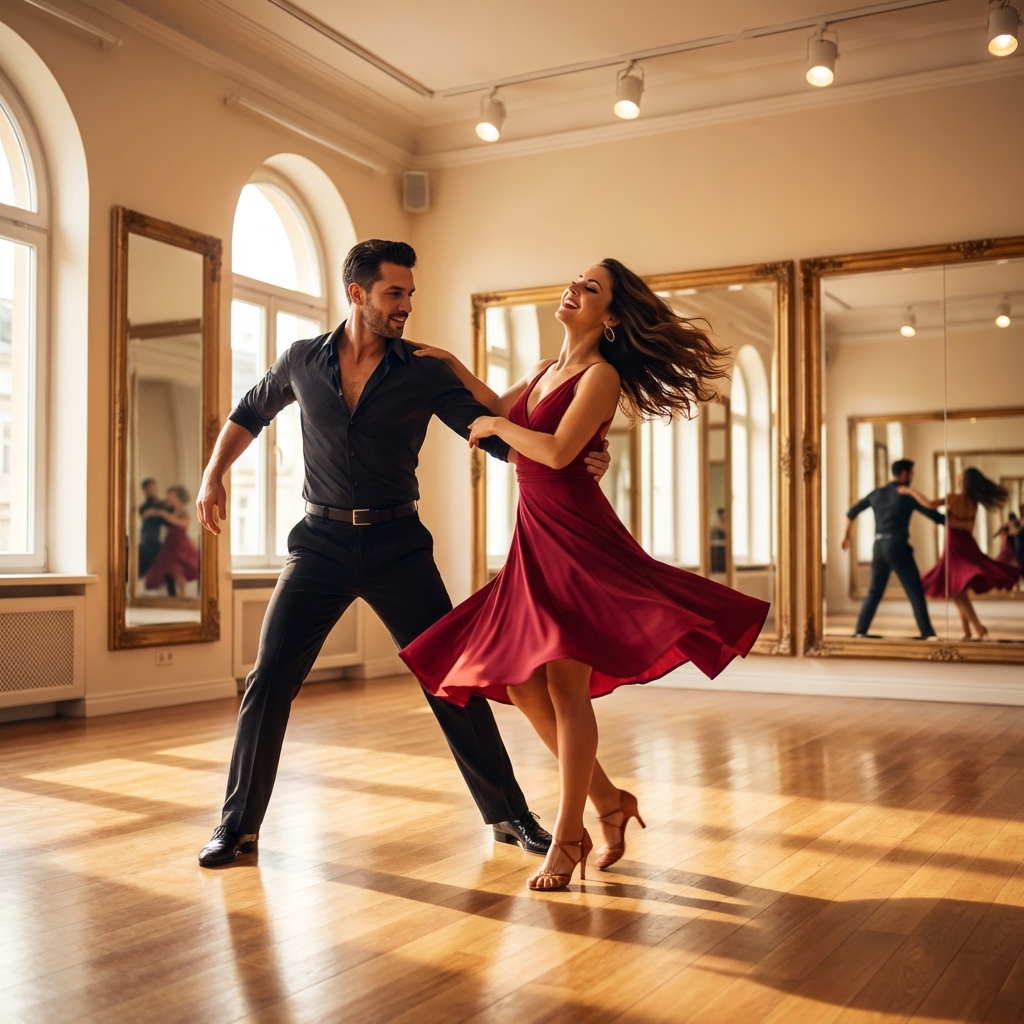
Salsa On1 vs On2: only one beat apart, and which one to learn first
Worried that if you pick the wrong salsa timing, you'll have to start over? You won't. On1 and On2 share the same steps, the same turns and the same music. The only thing that moves is the beat where you change direction.
Quick answer
Salsa On1 vs On2 comes down to one beat. On1 (LA style) breaks, or changes direction, on beat 1. On2 (New York style) breaks on beat 2. Both step on 1-2-3, pause on 4, step on 5-6-7 and pause on 8. New to salsa? Start with On1: beat 1 is the easiest beat to hear, and your steps and turns carry over if you add On2 later.
"Should I learn On1 or On2?" is a smart question: it means you're already listening to the music, not just your feet. Starting from zero? Our beginner's guide to salsa classes in Montreal covers your first class. The timing question can wait until after it.
The difference between salsa On1 and On2, count by count
Salsa is counted in eights. In both timings you take three steps, pause, take three steps, pause. The break is the step where you change direction, and it's the only thing that moves:
| Count | On1 (LA style) | On2 (New York style) |
|---|---|---|
| 1 | Break (change direction) | Step |
| 2 | Step | Break (change direction) |
| 3 | Step | Step |
| 4 | Pause | Pause |
| 5 | Break | Step |
| 6 | Step | Break |
| 7 | Step | Step |
| 8 | Pause | Pause |
On1 puts the break on the downbeat, the beat you'd clap on without thinking. On2 puts it on 2, where the conga drum plays its sharp slap. That's why On1 feels punchy and direct, and On2 feels smoother and a little laid back. This is the standard New York count for On2, the timing Eddie Torres made famous.
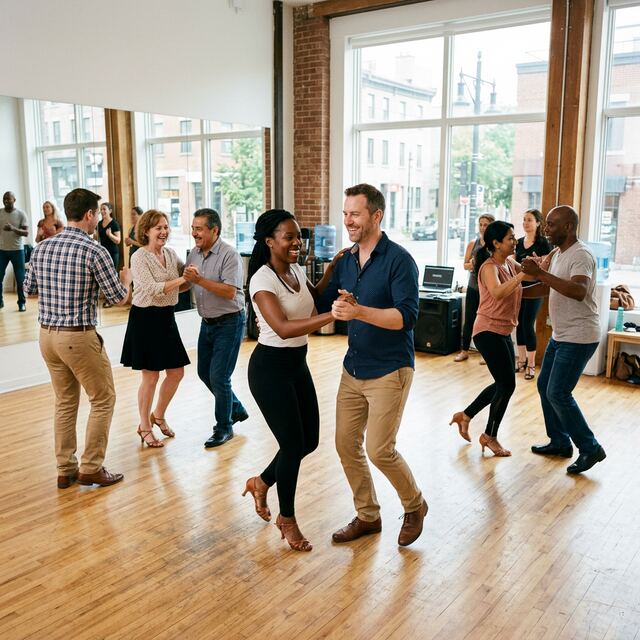
Both are danced in a line, called the slot: the follower travels up and down it and the leader steps out of the way. So a turn you learn On1 is the same turn On2. It just starts one beat later.
Can't find the 1 yet? That comes before any of this. Our guide to finding the 1 in salsa music gives you four ways to hear it.
Salsa On1: punchy and easy to hear
Why dancers choose it:
- The break lands where your ear already is. Beat 1 is the strongest pulse in the music, so the timing feels natural sooner.
- Many beginner classes start here. If you take salsa somewhere new, On1 is a safe bet.
- It's built for show. LA style is known for fast spins, dips and big styling.
- It suits a salsa first dance. The break hits the beat your guests clap to, which reads well from the edge of the floor at wedding dances.
What to watch:
- The strong downbeat pulls you to rush. Hold the pauses on 4 and 8.
- Tricks can crowd out connection. A big dip without a clear lead is a risk, not a move.
Salsa On2: smoother, and closer to the drums
Why dancers choose it:
- It rides the conga. Breaking on 2 lines you up with the slap, the heartbeat of the rhythm section.
- It flows. The break on a softer beat gives the dance a rolling, less choppy feel.
- It trains your ear. You can't dance On2 without listening hard, so your musicality grows with it.
- It's New York's home timing. If you plan to dance in New York, On2 is the one to know.
What to watch:
- At first, your body wants to break on 1. On2 can feel like you're behind the music.
- Fewer beginner classes start here, so it's more often a second timing than a first.
Is Cuban salsa On1 or On2?
Usually on 1, which Cuban dancers call a tiempo. Some dance contratiempo, breaking on 2. What's different is the shape: Cuban salsa, called casino, isn't danced in a slot. The couple circles each other, with more turns wrapped around the body.
You may also see Rueda de Casino: couples in a circle, a caller shouting the moves, partners swapping around the ring. If you learn On1 first, your timing carries over to casino. What changes is the shape of the dance, not the count.
On1 and On2 on Montreal dance floors
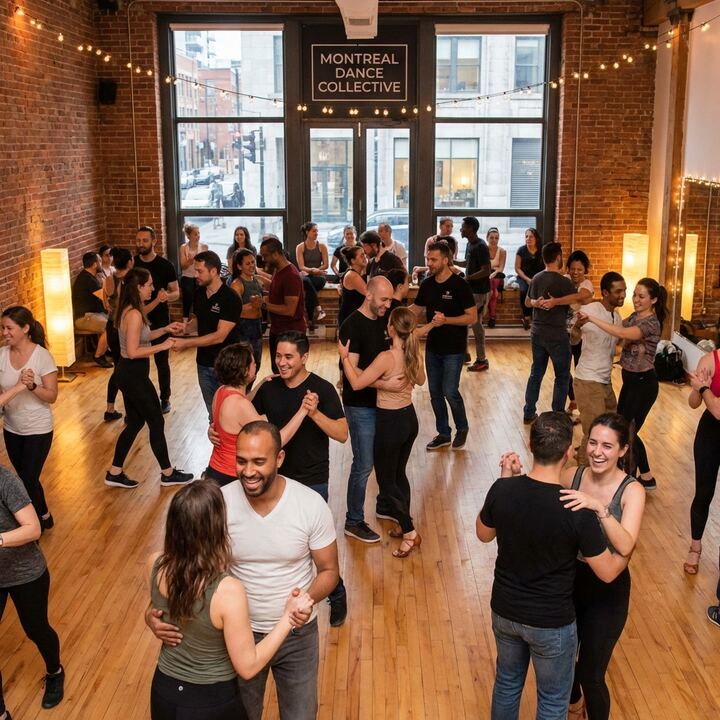
Montreal socials mix both timings. On a social floor, the leader sets the timing and the follower matches it. Not sure what your partner dances? Ask "On1 or On2?" before the song starts. It's a normal question, and it saves you both a confusing three minutes.
Leading On1 to a follower who only knows On2 (or the other way round) feels like a bad connection, even when both of you dance well. Our guide to leading and following in salsa covers that problem and others, and the Montreal salsa social survival guide gets you ready for your first night out.
Which should you learn first? Pick by your goal
- Brand new to salsa: On1. Learn to hear the 1 first; the 2 is easier to find once the 1 is automatic.
- You want to dance at Montreal socials: start On1, then add On2 so you can say yes to more partners.
- You're a musician or already hear the congas: try On2. It may feel natural from the start.
- You want a salsa first dance at your wedding: On1.
- You'll be dancing in New York: On2.
- You mainly want a fun workout: either one. Your heart rate can't tell the difference. See our salsa and bachata classes for adults.
Still torn? Call 514-966-3736 for a free 15-minute phone consultation. Tell me what you want salsa for, and I'll tell you which timing to start with.
Learning both: what carries over
Switching timing is not starting over. Your basic step, your turns, your frame and your partner connection all come with you. What changes is the beat your break lands on, and that takes your ear some retraining.
- Get one timing automatic first. Learn two at once and your feet will mix them up mid-song.
- Practise the new break to slow songs. Count out loud, and clap the 2 before you step on it.
- Expect to feel clumsy for a while. That's the old timing pulling at you, not a lack of talent.
On1 and On2: your questions
Is On2 harder than On1?
At the start, yes: On2 asks you to break on a beat you don't notice first. Once you can hear the conga slap, On2 stops feeling late.
Can an On1 dancer dance with an On2 dancer?
Yes, once the follower can match either timing. That's the payoff of learning both.
Do I have to choose a timing before my first salsa class?
No. Your first classes are about the basic step, the hold and finding the 1. The timing question starts to matter when you go social dancing.
Find your salsa timing on a free 15-minute call
Starting from zero? Our beginner class teaches salsa and bachata from the first step, and you can come alone: partners rotate. Want one-on-one work on your timing, or a second timing on top of your first? That's what private lessons are for.
I'm a two-time Canadian vice-champion, and I've taught for 19 years.
Alina Litvak, Founder of Quartier Latin Dance Studio
Two-time Canadian Vice-Champion • 19 Years Teaching Experience