Not sure which style? Every dance class in Montreal explained
Afraid of picking the wrong dance and wasting a whole session? Start with our beginner class: it teaches salsa and bachata both. Below: what every style feels like and who it suits.
Quick answer
Which dance style should I try? For a social hobby, start with salsa or bachata: our beginner group class teaches both, so you don't have to choose on day one. For a wedding or a touch of elegance, try waltz or rumba. For a workout, try samba or jive. Want to dance with someone? Every style we teach is a partner dance, and you can come alone. Still torn? Pick the music you'd love to hear every week, because that's what keeps beginners coming back.
Salsa, bachata, waltz, tango, cha-cha, hip-hop, contemporary: where do you even begin? Each style has its own music and personality, and what thrills one person bores another. Here's how each one feels, so you can match a dance to you. Our guide to dance classes in Montreal covers schedules and levels.
Every style at a glance
Twelve styles side by side. The last column shows where you can start each one with us.
| Style | Feels like | Partner or solo | Learn it with us |
|---|---|---|---|
| Salsa | Fast, joyful, social | Partner | Beginner group class, intermediate class, private lessons |
| Bachata | Slow to medium, romantic | Partner | Beginner group class, intermediate class, private lessons |
| Cha-cha | Medium, playful, precise | Partner | Intermediate class, private lessons |
| Rumba | Slow, expressive | Partner | Intermediate class, private lessons |
| Samba | Fast, bouncy, a workout | Partner | Intermediate class, private lessons |
| Jive | Fast, kicky, cheerful | Partner | Intermediate class, private lessons |
| Paso doble | Marching, dramatic | Partner | Private lessons |
| Waltz | Slow, sweeping, elegant | Partner | Private lessons |
| Tango | Sharp, intense | Partner | Private lessons |
| Foxtrot | Smooth, gliding | Partner | Not on our class list |
| Hip-hop | Athletic, current music | Solo | Not on our class list |
| Contemporary | Expressive, storytelling | Solo | Not on our class list |
Latin dances
This is where our classes live. Salsa and bachata start in the beginner class; cha-cha, rumba, samba and jive join in the intermediate class.
Salsa is energetic, social and rhythmically infectious. It's danced to fast, percussive music with Caribbean roots. The vibe is joyful and communal, and salsa socials are a friendly place to try what you learn. Best for: people who want a social hobby, enjoy upbeat music and like meeting new people.
Bachata is slower, more sensual and deeply romantic. The music is guitar-driven Dominican pop with emotional melodies. Its basic step is slow and easy to feel, which makes it a gentle place to start. Best for: romantics, people who prefer slower music, and couples looking for something intimate.
Cha-cha is playful and flirtatious. The syncopated rhythm (2, 3, cha-cha-cha) is catchy and fun, and the precise footwork carries over to other Latin styles. Best for: people who like pop music, enjoy precision and want a versatile foundation. More in cha-cha demystified.
Rumba is often called the "dance of love." It's the slowest of the Latin dances, with expressive hip movement and intense partner connection. Best for: people who value emotional expression, aren't in a rush, and enjoy telling a story through movement.
Samba is pure Brazilian carnival energy. The bouncing action and fast tempo make it one of the most physically demanding dances. Best for: people who want a serious workout, love Brazilian music and enjoy high-energy movement. See our samba essentials.
Jive is the fast, kicky one, born from swing and rock and roll. Lots of bounce, quick feet and big smiles. Best for: people who love upbeat retro music and don't mind getting out of breath. Read more about jive's high energy.
Paso doble is a march inspired by the bullfight: proud posture, sharp lines and dramatic music. It's a style for people who enjoy a bit of theatre. Our paso doble guide explains the story behind it.
Ballroom dances
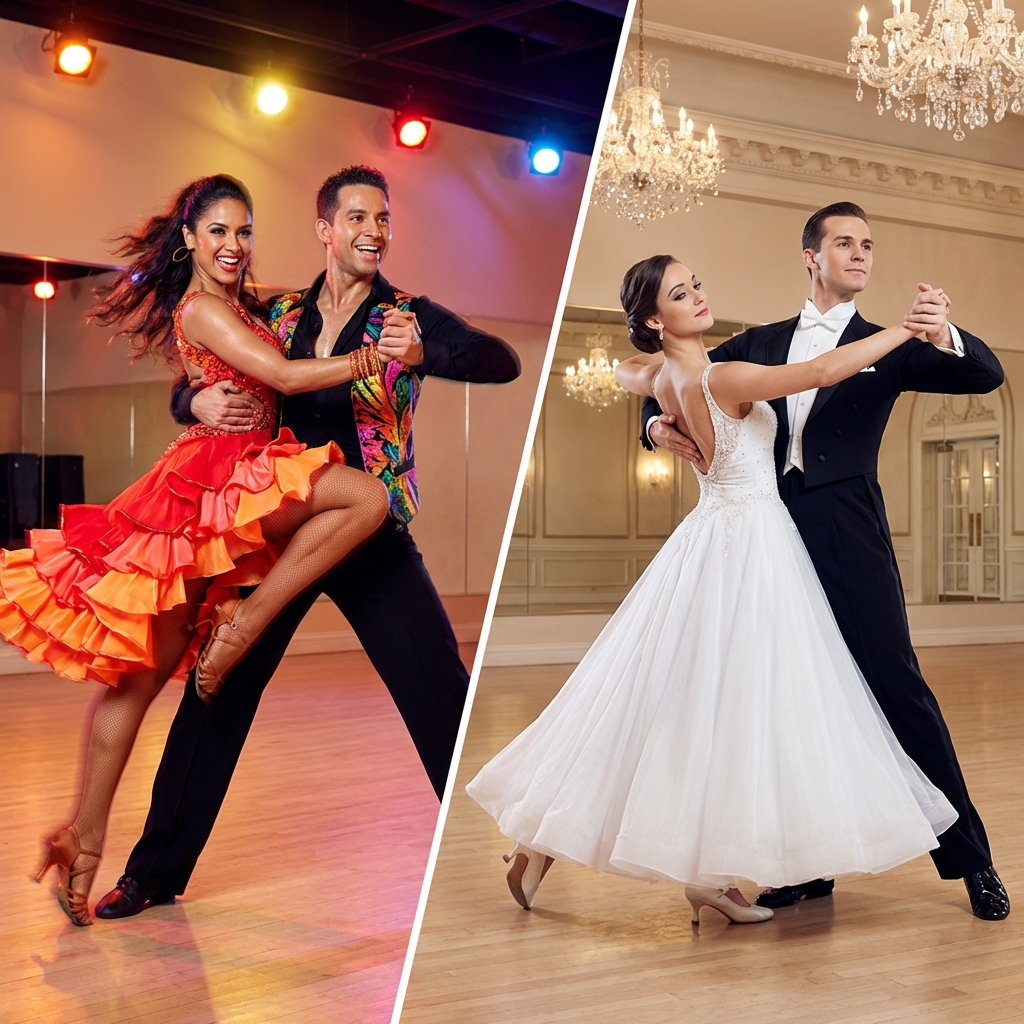
Got a wedding date or a gala? Start here. Ballroom is more formal and structured than Latin, and with us you learn it in private lessons. Read how Latin and ballroom dancing compare.
Waltz is timeless elegance. The sweeping movements and rise-and-fall action make you feel like you're floating. It's a classic first dance for weddings. Best for: couples, romantics, and anyone who loves classical music. See the waltz elegance guide.
Tango is dramatic and intense. Every movement is sharp, deliberate and emotionally charged. Argentine tango emphasises improvisation and close connection; ballroom tango is more choreographed and theatrical. Best for: people who like intensity, dramatic music and controlled movement. Our complete tango guide goes deeper.
Foxtrot is smooth and sophisticated. Think Frank Sinatra, vintage jazz clubs, effortless gliding. It's technically rewarding and looks wonderful when done well. Best for: people who appreciate classic style and smooth, continuous movement.
Street and contemporary styles
Hip-hop is expressive, athletic and deeply connected to urban music culture. Best for: people who love current music, want creative freedom and enjoy solo expression.
Contemporary blends ballet technique with emotional storytelling. It's more expressive and less rigid than classical ballet. Best for: artistic people who want to explore emotion through movement.
Both are solo. If what you really want is to dance with someone, that's all we teach, and you can come alone: partners rotate in class.
How to choose your first style
Four questions. Your answers point straight at a style. Prefer a personality quiz? Try our guide to choosing your first dance style.
- Do you want to dance with a partner or solo? Partner: salsa, bachata, waltz, tango. Solo: hip-hop, contemporary.
- Do you want a social scene? Salsa and bachata are what Montreal's Latin socials dance, so you'll have somewhere to use your steps outside class.
- Is there a specific event? Wedding: waltz, rumba or a slow bachata. Latin party: salsa. Competition: any Latin or ballroom style.
- What music moves you? Listen to a few songs from each genre. The dance you're drawn to will usually match the music that gives you chills.
Best Latin styles to learn first
For a first Latin dance, start with bachata or salsa. Both are partner dances you can take straight to a social, so there is always somewhere to use what you learn. Read why bachata is the easiest first dance or follow the salsa beginner's guide. Prefer a slower, more romantic start? Rumba is the slowest of the Latin dances.
Where to start with us
You don't need to know your style before you call. Here is how our classes line up with the styles above:
- Beginner group class: salsa and bachata. The basics of partner dancing, one step at a time. No experience and no partner needed.
- Intermediate class: cha-cha, rumba, samba, salsa, bachata and jive. For dancers with some experience who want to add styles and refine technique.
- Private lessons: any of our nine styles, including waltz, tango and paso doble. The right path if you want ballroom, have a wedding date, or want to start one on one. Our private lessons guide explains how they work.
Regular classes run in sessions, usually 8 weeks, in English, French and Russian, and Alina teaches every class. New beginner sessions are on the way: call to get on the list.
Questions about picking a style
Salsa or bachata: which is easier for a complete beginner?
Bachata has a slower basic step, so it's usually the gentler start. Salsa is faster and more energetic. Our beginner group class teaches both, so you can feel the difference in your own feet before you lean one way.
What if I pick a style and don't like it?
Nothing is wasted, and you may not have to pick at all: the beginner class teaches salsa and bachata both, and timing and posture carry straight into cha-cha or rumba later.
Which style suits a wedding first dance?
It depends on your song. A slow song suits waltz, rumba or bachata; an upbeat one suits cha-cha or jive. Our wedding dance lessons guide walks through the choice.
Do I need dance shoes for my first class?
No. Bring comfortable clothes, a water bottle, and dance shoes if you have them. Socks are fine to start.
Still can't pick? Call and we'll pick with you.
Tell us the music you love and why you want to dance. In a free 15-minute call we'll point you to the class or private lessons that fit.
Alina Litvak, Founder of Quartier Latin Dance Studio
Two-time Canadian Vice-Champion • 19 Years Teaching Experience