Starting from zero: a beginner's guide to dancing in Montreal
Never danced before? How to spot a real beginner class, which style to start with, and what your first few weeks actually look like.
Quick answer
Best beginner dancing lessons in Montreal? Look for dedicated beginner-level classes (not mixed-level), patient instructors with teaching credentials, and a welcoming atmosphere. Latin dances like salsa, bachata, and cha-cha are the most beginner-friendly styles. You don't need a partner, and you don't need any experience.
If you're worried you'll be the only one in the room who has no idea what they're doing, you won't be. That's the whole point of a beginner class. Every dancer you admire once stood exactly where you are now, in a first class, not knowing their left foot from their right.
Still, walking into a studio for the first time as an adult takes courage. This guide is here to make that first step easier: how to tell a real beginner class from one that just uses the label, which styles to start with, what happens in your first lesson, and what the first month looks like.
A great first lesson goes a long way. A good beginner class makes you feel capable. A bad one makes you feel hopeless. So choosing the right dancing lessons in Montreal matters more than you might think.
What makes a dance lesson beginner-friendly?
Not every class labelled "beginner" is built for beginners. A beginner-friendly class has these:
- No assumptions about prior knowledge. A real beginner class starts from scratch. How to stand, how to shift your weight, how to listen to the beat. If the instructor jumps straight into combinations or assumes you know basic terminology, that's not a beginner class.
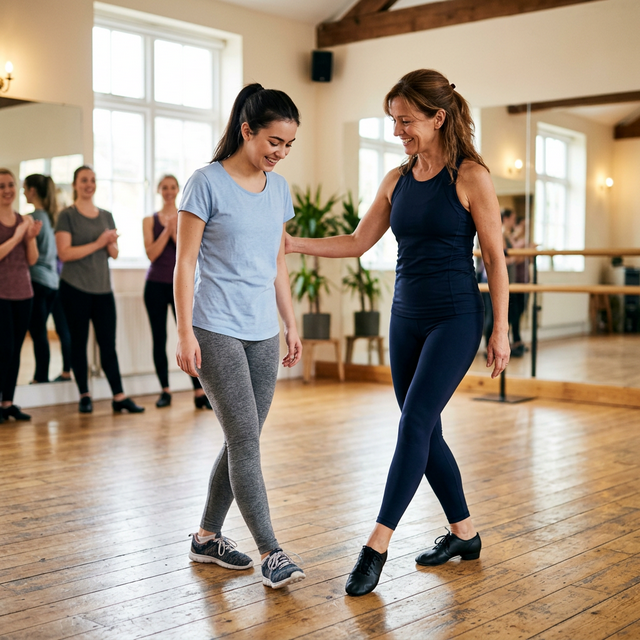
- Clear, patient instruction. Great beginner instructors explain things multiple ways. They show the move, they break movements into small pieces, and they give you time to practice before moving on. They never make you feel rushed or stupid for asking questions.
- A supportive group dynamic. The best beginner classes pair experienced students with newer ones, encourage partner rotation, and create an atmosphere where mistakes are normal, even celebrated as part of the learning process.
- Manageable class sizes. In a class of 30, the instructor can't see what you're doing wrong. In a class of 8 to 15, they can walk around, offer corrections, and make sure nobody falls behind.
Questions worth asking before you book: Is this class for complete beginners, or mixed levels? Do I need to bring a partner? What language is it taught in? How big are the classes? A good studio will answer all four without hesitation, and many (including ours) are happy to do it in a free phone consultation.
Best dance styles for absolute beginners
Some dance styles have a gentler learning curve than others. If you've never danced before, these are the best places to start.
Salsa is Montreal's most popular dance for beginners. The basic step is simple, a forward-and-back pattern that you can learn in your first class. The music is energetic and forgiving, and Montreal's active salsa social scene means you'll have places to practice almost every night of the week.
Bachata might be the easiest partner dance to learn. It's a simple side-to-side pattern danced to slower, romantic music. Beginners often feel at ease on a social floor within a few weeks. It's also popular in Montreal, so you'll always find people to dance with. Here's why bachata is the easiest partner dance to learn first.
Cha-cha is playful, moderately paced, and teaches you fundamental Latin technique that transfers to every other dance. The chassé step (cha-cha-cha) is intuitive and fun, making it a great confidence builder for new dancers.
Waltz is the best starting point for ballroom dancing. The slow tempo gives you time to think, and the simple box step is accessible for anyone. If you're preparing for a wedding or formal event, waltz is often the first dance people learn.
Still can't decide? Pick the music you'd happily listen to on repeat. You'll hear it every class, and loving the music is what keeps beginners coming back.
What to expect in your first lesson
Your first dancing lesson in Montreal will follow a predictable structure:
- Warm-up (5 min): Light movement to get your body ready and help you feel the music
- Basic step breakdown (15 to 20 min): The instructor teaches the foundational step, breaking it into pieces
- Partner work (15 to 20 min): You'll practice with a partner, learning how to lead or follow
- Putting it together (10 min): Combining what you've learned to music at regular speed
- Free practice (5 min): Time to practice, ask questions, and meet other students
Don't worry about remembering everything. Your first class is about exposure, getting your body used to moving with rhythm and with a partner. The details come with repetition over the next few weeks.
Practical tips for your first class
A few things that will help you feel more comfortable:
- Wear comfortable clothing that allows you to move freely, avoid jeans if possible
- Bring shoes with smooth soles (leather-soled dress shoes or dance shoes). Rubber soles grip the floor and make turning difficult. More in our what to wear to a dance class guide, and more quick answers are in our FAQ
- You don't need a partner. Most group classes rotate partners, so you'll dance with multiple people
- Arrive a few minutes early to introduce yourself to the instructor and settle in
- Be patient with yourself. Nobody looks graceful in their first class. That's completely normal
Your first month: what progress really looks like
Most beginners expect to either "get it" right away or never get it. Real progress sits in between, and it's steadier than you think:
- Class 1: You learn the basic step and feel a little lost. Completely normal.
- Classes 2 to 3: The basic step starts to feel automatic, so you can stop counting out loud and start listening to the music.
- Classes 4 to 6: You can string a few moves together with a partner. This is when most people start to have real fun.
- After that: Then you can try your first social dance night. Nobody expects you to be perfect there either.
Everyone moves at their own pace, and that's fine. The one thing that reliably speeds it up is coming back every week. For a longer view, read how long it really takes to learn to dance.
Common questions
What if I'm the worst one in class? Someone always feels that way in week one, and it's almost never true. Instructors watch progress, not talent, and in a real beginner class everyone is figuring out the same basic step as you.
How often should a beginner come? Once a week is enough to make steady progress. Twice a week speeds things up, but consistency matters more than intensity: a class every week beats three classes one week and none the next.
Group class or private lesson? Group classes are the most social and affordable way to start. Private lessons suit you if you want faster progress, have a deadline like a wedding, or feel too shy for a group at first.
Looking for your first dancing lesson? Our beginner group classes are specifically designed for people with zero experience. Classes available in English, French, and Russian. Starting in January, or looking for classes for your kids? Read why January is a good time to start dancing and what to expect from kids dance classes in Montreal.
Your first step starts here
No experience needed. Just show up and we'll take care of the rest.
Alina Litvak, Founder of Quartier Latin Dance Studio
Two-time Canadian Vice-Champion • 19 Years Teaching Experience