7 beginner dance mistakes (and how to avoid them)
After teaching more than 1,000 beginners, here are the patterns I see, and how to fast-track your progress.
Quick answer
What's the biggest mistake? Looking at your feet. Every instructor says it, few beginners believe it, but your feet know where they are. Trust them and look at your partner instead.
Every dancer starts as a beginner. Every single one. With 19 years of teaching and 1,000+ students at our Montreal studio, we know the feeling of walking in nervous and convinced you have "two left feet." Avoiding these seven common mistakes makes the early weeks much easier.
Mistake 1: looking down at your feet
This is the most universal beginner mistake, and also the most damaging. When you look at your feet, three bad things happen simultaneously: your posture collapses forward, your connection with your partner breaks, and, counterintuitively, you're likelier to step on toes because you're leaning into your partner's space.
The fix: For partner dances, look over your partner's right shoulder. For solo practice, pick a spot on the wall at eye level. Your brain knows exactly where your feet are. It's called proprioception, and it works best when you stop second-guessing it.
Mistake 2: holding your breath
Concentration makes people tense, and tension makes people hold their breath. I see this in almost every first lesson, students go rigid trying to remember the steps. The result? Stiff arms, locked shoulders, and movements that look robotic rather than natural.
The fix: Before the music starts, take three deep breaths and consciously relax your shoulders. If you catch yourself tensing up mid-dance, exhale slowly while smiling. It sounds simple, but it works remarkably well.
Mistake 3: apologizing for every mistake
Beginners apologize constantly, "Sorry!" after every misstep, wrong turn, or moment of hesitation. While the politeness is sweet, the constant apologies actually make things worse. They break the flow of the dance, make your partner feel like they're causing the errors, and keep you focused on failure rather than progress.
The fix: When you make a mistake, just keep moving. Your partner probably didn't notice, and if they did, they've made the same mistake a hundred times themselves. Save the apologies for stepping directly on someone's foot (which happens to everyone).
Mistake 4: skipping practice between classes
One hour of class per week is a great start, but the magic happens between classes. Students who practice even briefly at home progress two to three times faster than those who don't.
The fix: You don't need a dance floor. Play music while doing dishes and practice your basic step in the kitchen. Walk through your routine in socks on hardwood. Even running through the steps mentally (called "visualization") helps build muscle memory. Ten minutes a day beats one hour once a week.
Mistake 5: rushing to learn complex moves
New students often want to skip ahead to the flashy stuff, dips, lifts, complicated turn patterns. I understand the excitement, but here's the truth: a clean, musical basic step will always look better than a sloppy complicated pattern. Advanced dancers know this. It's why they obsess over fundamentals.
The fix: Spend your first month mastering the basic step, weight transfer, and musicality. When your basic feels effortless, adding complexity becomes natural rather than forced.
Mistake 6: dancing without listening to the music
Some beginners are so focused on their feet that they completely disconnect from the music. They move in time with their counting, not the beat. The result looks mechanical, technically correct but lifeless.
The fix: Before you start moving, stand still and listen. Find the beat. Let a few bars pass. Then start on a clear "1." Outside of class, listen to dance music during your commute (salsa, waltz, cha cha) and practice spotting the rhythm. The more music you absorb, the more natural your dancing becomes.
Mistake 7: giving up too soon
The first few weeks of dance are the most awkward. Your body is learning entirely new coordination patterns, and it takes time for those neural pathways to develop. It's easy to quit during this uncomfortable phase, right before the breakthrough moment where everything starts clicking. If it feels like you have two left feet, private coaching for two left feet can speed things up.
The fix: Commit to at least 8 weeks before judging your progress. That's the typical timeframe for the "beginner awkwardness" to fade and genuine competence to emerge. Every experienced dancer you admire went through exactly the same phase. They just didn't quit. Curious how long it takes to learn to dance, or what the path from your first group class to the social floor looks like?
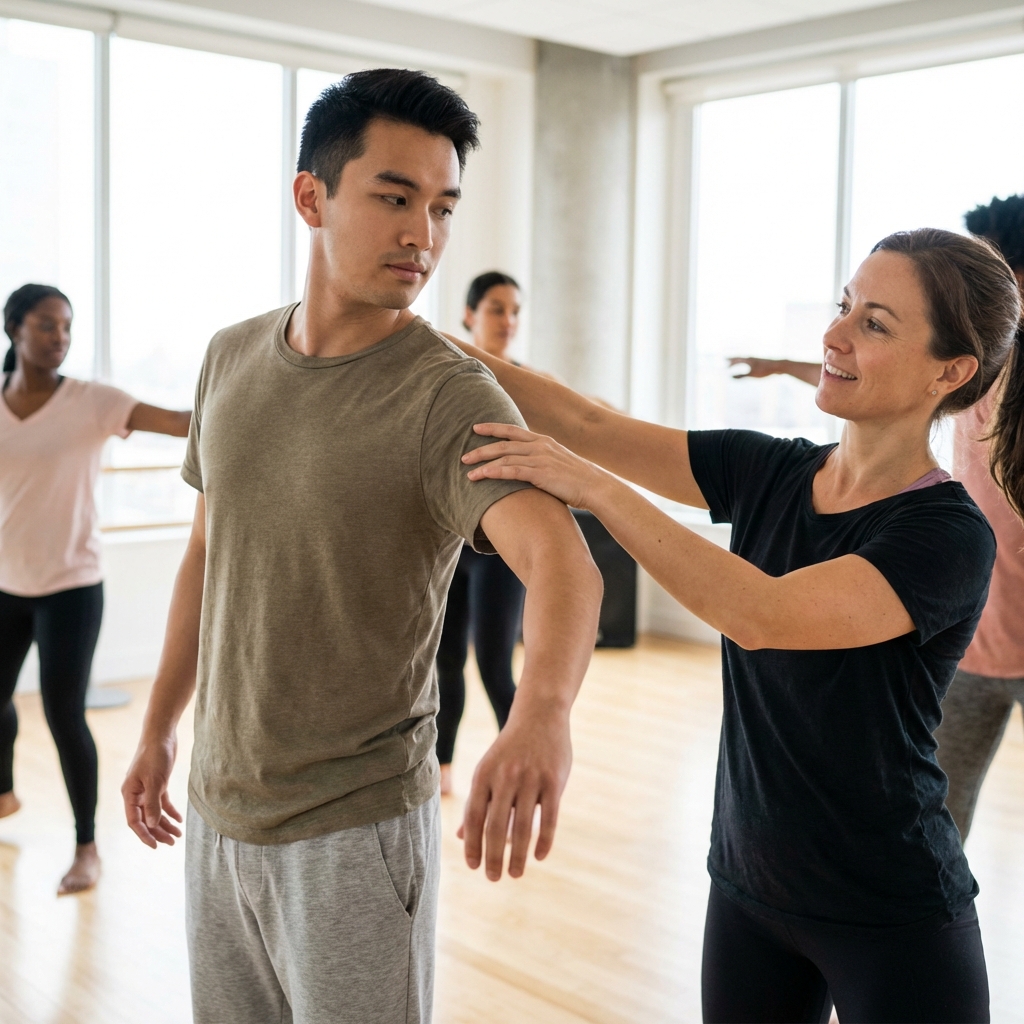
At Quartier Latin, our beginner-friendly classes get you past these mistakes quickly. Classes are available in English, French, and Russian, and we welcome absolute beginners every week.
Start your dance journey the right way
Learn from an experienced instructor who'll guide you past these mistakes.
Alina Litvak, Founder of Quartier Latin Dance Studio
Two-time Canadian Vice-Champion • 19 Years Teaching Experience